
A podcast can look successful on paper and still fail in practice. Downloads may rise while the wrong people listen, the best guests go unheard, and no one takes the next step. That is why the real question is not only how many people clicked play. It is whether the show is earning attention from the people who matter.
In this article, we’ll look at what podcast metrics actually matter, which numbers can mislead you, how to read podcast analytics properly, and how businesses, charities, founders, and purpose-driven teams can measure real podcast success without getting buried in vanity data.
What Podcast Metrics Actually Matter?
What podcast metrics actually matter depends on why the podcast exists. A nonprofit podcast, a B2B podcast, a founder-led interview show, and a sponsor-funded series should not use the same scoreboard. One may need donor trust. Another may need sales conversations. Another may need stronger community engagement, better guest relationships, or a steady lift in branded search.
Downloads still matter. They show reach, demand, and momentum. But download numbers alone cannot tell you whether the right people listened, whether they cared, or whether the show helped your organization move closer to its goal. A better way to measure podcast success is to ask a more useful question:
Is this show doing the job we created it to do?
For a purpose-driven organization, the useful numbers usually sit across four areas: reach, engagement, audience quality, and action. Reach shows whether people find the show. Engagement data shows whether they stay. Audience quality shows whether the podcast audience fits the mission or market. Action shows whether listeners do something meaningful afterward.
That action might be a newsletter signup, donor inquiry, qualified lead, speaking invite, partnership conversation, website visit, or a listener who shares the episode with a colleague. Those signals are quieter than chart rankings, but they often carry more weight.
If the show is still in its planning stage, a clear strategy matters before the dashboard does. That is where professional podcast production support can help a team define what success should look like before the first episode goes live.
Why Downloads Alone Can Mislead You
Podcast downloads have been treated as the headline number for years. They are easy to report, easy to compare, and easy to celebrate. They can also create a false sense of certainty.
A download usually means an episode file was requested. It does not always mean a real person listened to the whole episode. It does not prove that the listener was the right person. It does not show whether the episode changed perception, influenced a decision, or created trust.
The IAB Tech Lab’s Podcast Measurement Guidelines were created to help the industry define and measure downloads, audience, and ad delivery more consistently across podcast platforms. That consistency matters, especially for advertising and media buying, but it does not make downloads the only success metric worth tracking. Here’s the thing: downloads are a reach signal, not a full success signal.
| Metric | What It Tells You | What It Does Not Tell You |
| Downloads | Episode file requests and potential reach | Whether someone listened with attention |
| Plays or streams | A clearer sign that someone actively started the episode | Whether they stayed through the strongest parts |
| Unique listeners | Estimated audience size | Whether the audience fits your goal |
| Completion rate | How many people finished the episode | Why they stayed or dropped off |
| Conversions | Listener action after the episode | Full brand trust or long-term influence |
| Follower growth | Whether people want more from the show | Whether those followers become active listeners |
A good reporting system does not worship one big number. It connects several podcast metrics and asks what story they tell together. If your team wants to move from raw podcast numbers to clearer insight, podcast monitoring services can help turn scattered analytics into useful decisions.
Podcast Downloads vs Listens: What’s the Difference?
Podcast downloads and listens are not the same thing. A download is usually a file request from an app, device, or podcast platform. A listen, play, stream, or view is closer to active consumption. Even then, each platform has its own language and reporting method, so podcast analytics should be read as trends rather than the perfect truth.
Spotify’s own creator guidance explains that engagement metrics help creators understand how people interact with a show, not only how many times an episode was accessed or played. It also says followers are an important signal because they show how many people chose to keep the show in their library.
For YouTube podcasts, the key numbers may look different again. Views, watch time, audience retention, click-through rate, and subscribers can matter as much as audio downloads. That shift matters because podcast consumption is no longer limited to audio apps.
Edison Research’s Infinite Dial 2025 reported that 48% of Americans age 12+ have both listened to and watched a podcast. It also found that YouTube is the service used most often by 33% of U.S. weekly podcast listeners.
So, when someone asks, How many downloads does a podcast have? The honest answer is often, On which platform, over what time period, and compared with what goal? A reliable podcast hosting service can help centralize some of this data, but even the best podcast analytics need interpretation.
The Podcast Metrics That Show Real Audience Engagement
Engagement metrics are where the useful detail starts. A podcast can have a decent number of downloads and still fail to hold attention. Another show can have modest podcast audience numbers but strong retention, steady repeat listeners, and regular replies from the exact people the brand wants to reach. That second show may be more valuable.
The podcast metrics that matter for engagement include average completion, average consumption, time listened, listener retention, episode drop-off points, repeat listeners, followers, reviews, comments, social shares, newsletter replies, and direct feedback from guests or listeners.
Average completion is especially useful. If listeners regularly stay for most of an episode, the content is probably meeting their expectations. If they drop off early, the problem may sit in the introduction, episode length, topic fit, sound quality, or structure.
Episode length also needs context. A 60-minute interview with a high average completion may be healthier than a 20-minute episode that people abandon after four minutes. The number only means something when you connect it to listener behavior.
For Humanise Live’s type of audience, engagement is not just a media metric. It is a trust signal. Charities, sustainability companies, social-impact funds, and B2B SaaS teams often need depth more than mass attention. If the right 300 people listen closely, share the episode, and take action, that may beat 10,000 passive plays.
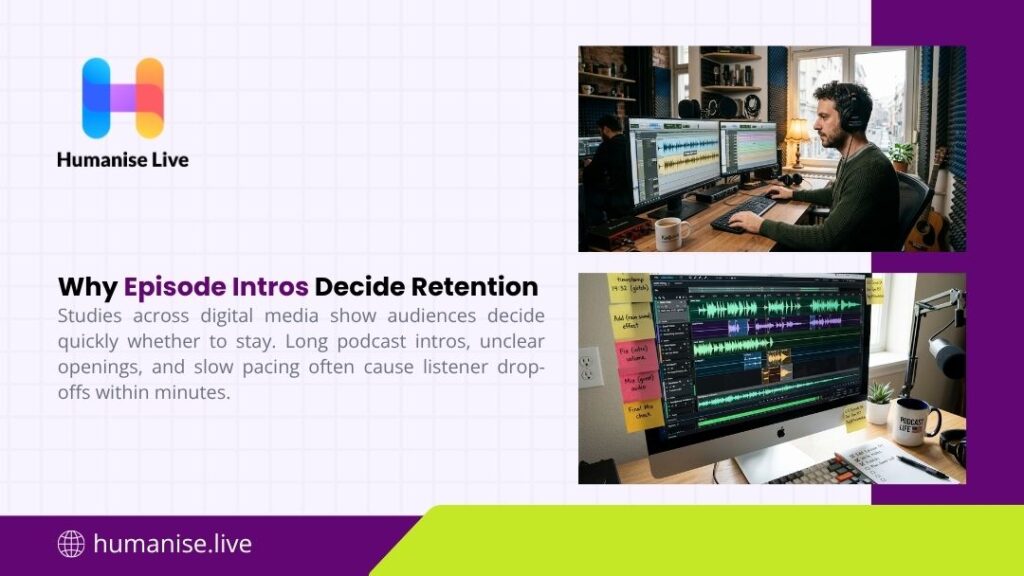
Strong editing can also improve retention. Clear pacing, tighter openings, cleaner sound, and sharper episode structure make a real difference. That is why podcast editing for stronger listener retention is not just a production task. It supports podcast performance.
What Are Good Podcast Numbers?
What are good podcast numbers? is one of the most common questions in podcasting. It is also one of the easiest to answer badly. Good podcast numbers depend on the niche, audience, goal, promotion plan, episode age, and the role the podcast plays in the organization’s wider strategy.
A national entertainment show may need tens of thousands of downloads to look healthy. A niche B2B podcast may be commercially useful with a few hundred average podcast downloads per episode if those listeners include buyers, partners, analysts, funders, or decision-makers. A charity podcast may care less about average podcast listeners and more about donor conversations, volunteer interest, and community response.
That is why how many podcast downloads is good does not have a clean answer.
| Podcast Goal | Numbers That Matter Most | Why They Matter |
| Brand awareness | Downloads, reach, follower growth, impressions | They show whether more people discover the show |
| Thought leadership | Completion rate, shares, guest quality, mentions | They show authority and relevance |
| B2B lead generation | Target listener quality, website visits, and booked calls | They connect the podcast to commercial value |
| Charity or nonprofit impact | Supporter feedback, donor action, community growth | They connect the show to mission outcomes |
| Sponsorship | Downloads, unique listeners, demographics, and ad completion | They help prove media value |
| Content marketing | Clip views, page visits, newsletter signups | They show how each episode supports wider campaigns |
Here are three realistic ways this plays out in practice:
| Scenario | Better Metric Than Downloads | Why It Matters |
| A charity podcast wants to build donor trust | Repeat listeners, donor replies, newsletter signups, campaign shares | The goal is not mass reach alone. It is a deeper belief in the mission. |
| A B2B SaaS company wants pipeline influence | Target-account listens, guest quality, booked calls, website visits | A small but senior audience can create more value than a broad casual audience. |
| A founder-led show wants authority | Completion rate, LinkedIn shares, speaking invites, and branded search | The podcast is working if it makes the founder more credible and memorable. |
For a B2B podcast, the right 100 listeners can be more valuable than the wrong 10,000. A show for social-impact investors, climate-tech founders, or nonprofit communications leaders will never be judged fairly against a comedy show or celebrity interview feed.The better benchmark is not Are we huge? It is are we reaching the people this show was built for? If the podcast needs to support business development, partnerships, or authority, a B2B podcast production strategy can help shape the show around the audience that matters most.
Platform Metrics: Apple, Spotify, YouTube, and Hosting Data
No single platform tells the full story. Apple Podcasts, Spotify, YouTube, and your podcast hosting platform each show a different layer of performance. Website analytics adds another layer. Social platforms add another. The challenge is not a lack of data. The challenge is knowing which data deserves attention.
| Platform | Best Metrics to Watch | Best Use |
| Apple Podcasts Connect | Followers, listeners, engaged listeners, plays, time listened | Loyalty and listening behavior |
| Spotify for Creators | Plays, starts, streams, followers, audience demographics | Platform growth and audience profile |
| YouTube Studio | Views, watch time, retention, subscribers, click-through rate | Video podcast performance |
| Podcast hosting platform | Downloads, locations, devices, apps, episode trends | Cross-platform reach |
| Website analytics | Episode page visits, conversions, search traffic | Business, SEO, and campaign impact |
The rise of video podcasting makes this even more important. If a show is distributed on YouTube, podcast download numbers may understate total consumption. If a show has strong clips on LinkedIn, Instagram, or TikTok, the episode’s influence may show up outside the RSS feed.
This is especially true for purpose-driven organizations. A clip from a founder, campaigner, researcher, or charity leader may reach the right person on social before that person ever subscribes to the podcast. That still counts as impact, even if the podcast hosting dashboard does not show the full journey.
Humanise Live is remote-first, which fits the way modern podcasts are made. Guests no longer need to be in the same room or even the same country. With a clean remote podcast recording setup, a show can bring in voices while keeping production quality high.
How to Measure Podcast Success for a Business or Nonprofit
A business or nonprofit podcast should not copy the measurement model of a celebrity show. For companies, charities, NGOs, and thought leaders, measuring podcast success means looking at the show’s role in the wider relationship with the audience. The podcast may build trust before a sales call. It may give supporters a deeper reason to care. It may help a founder explain complex ideas. It may turn event conversations into evergreen content. It may help a nonprofit show the people behind the mission. That kind of value does not always appear in podcast download statistics.
For a charity, success may look like donor replies, volunteer inquiries, campaign shares, partner interest, or stronger community engagement. For a B2B SaaS brand, success may look like better-fit leads, warmer sales conversations, stronger authority, and higher trust with target accounts. For a social-impact fund, success may look like deal flow, thought leadership, and stronger relationships with founders.
This is where Humanise Live fits naturally. Their work is not only about getting content online. It is about helping purpose-driven people and organizations turn big ideas into easy-to-watch or easy-to-listen shows that feel human and useful. The client brief also makes clear that Humanise Live wants to avoid cookie-cutter shows and lead with a human-first storytelling ethos.
A business podcast should therefore track both hard and soft signals. Hard signals include downloads, listeners, website visits, conversions, leads, and signups. Soft signals include guest feedback, audience replies, stakeholder trust, internal team confidence, and the quality of conversations the show creates. Both matter.
If the podcast represents a company, institution, or mission-led team, corporate podcast production for mission-led teams can help define the format, audience, production process, and reporting model from the start.
Podcast Growth Metrics: How to Tell If Your Show Is Moving in the Right Direction
Podcast growth is rarely a straight line. Some episodes get an early spike because a guest shares them widely. Some grow slowly because they rank in search or get recommended months later. Some are valuable because one senior person listens and sends an email. That is why podcast growth should be judged through patterns, not isolated wins.
The most useful podcast growth metrics include repeat listeners, follower growth, episode-to-episode retention, back catalog listens, search traffic to episode pages, guest-led referrals, newsletter growth, social clip performance, audience questions, direct inquiries, and branded search.
Back catalog listens are easy to overlook, but they can say a lot. If old episodes continue to attract listeners, the show is building long-term value. If only the newest episode performs, the content may be too time-sensitive or poorly organized for search and discovery.
Follower growth also matters because it shows future intent. Spotify’s Podcast Fan Study found that fans who follow a podcast listen to four times the number of episodes compared with non-followers, based on Spotify’s analysis of episode consumption from April to June 2022.
That does not mean every show should chase followers at any cost. It means followers are a loyalty signal. If people follow, return, and complete episodes, the show has a stronger foundation than a show that attracts one-off clicks.
Growth also depends on promotion. A good episode can underperform if no one sees it. Titles, clips, guest assets, email copy, search-friendly show notes, and publishing cadence all shape podcast performance.
Content repurposing should be part of the measurement plan, not an afterthought. If one long-form episode becomes clips, reels, show notes, newsletter copy, social posts, and campaign assets, the podcast has more chances to create value across the full marketing journey.
A team that wants more listeners needs a plan after the episode goes live. Podcast marketing services can help turn each episode into campaign content rather than a single upload.
Vanity Metrics vs Metrics That Matter
Vanity metrics are not always useless. They become a problem when they are treated as proof. Downloads, chart rankings, social likes, and big impressions can all be helpful. They can show reach, momentum, and awareness. But they need context. A spike from the wrong audience may not help the business. A viral clip may not bring podcast listeners. A chart ranking may not mean the show built trust.
The podcast metrics that matter connect back to behavior and action. Did people stay? Did they return? Did they follow? Did they share? Did they visit the website? Did they ask a question? Did they join the mailing list? Did a guest introduce the brand to a useful partner? Did a listener become a donor, lead, customer, or advocate? That is where the real story sits.
Dan Misener, co-founder of Bumper, told Marketing Against the Grain: “If you only pay attention to the download figure,” you might think your audience is falling when it may actually be growing on platforms where downloads are not a useful signal.
That point matters because podcast consumption is fragmented across audio apps, YouTube, websites, newsletters, and social clips. The audience may be growing, but not always in the one place the team checks first. Vanity metrics can point to attention, but meaningful metrics explain what that attention is worth.
How to Track Podcast Metrics Monthly Without Getting Lost in the Dashboard
A useful podcast dashboard should be simple enough to read and strong enough to guide decisions. It should not bury the team in every number available. It should answer three questions: what happened, why it may have happened, and what should change next.
| Dashboard Section | Metric to Include | Question It Answers |
| Reach | Downloads, unique listeners, platform split | Are more people finding the show? |
| Engagement | Completion rate, time listened, retention | Are people staying with the content? |
| Loyalty | Followers, repeat listeners, back catalog listens | Are people coming back? |
| Audience quality | Location, job role where available, target-account signals | Are we reaching the right people? |
| Action | Website visits, signups, inquiries, donor actions, booked calls | Is the podcast supporting the goal? |
| Editorial insight | Top topics, weak intros, guest performance, drop-off points | What should we improve next? |
A simple monthly reporting note can make the data more useful. It should name the strongest episode, explain the weakest point, identify the best traffic source, and choose one action for the next month.
| Monthly Field | Example Note |
| Top episode | Episode 12 had the highest completion rate and the most newsletter clicks |
| Weakest point | Listeners dropped after minute six, just before the main interview began |
| Best source | The guest’s LinkedIn post drove the most qualified visits |
| Audience signal | More listeners came from the target regions than in the month before |
| Next action | Shorten the intro and test clearer episode titles next month |
A monthly podcast dashboard can include a short written note, not just numbers. For example, Episodes with practical titles had higher completion and more website visits. Guest-led social posts brought traffic, but newsletter links brought more engaged listeners. Next month, test shorter intros and clearer episode titles. That kind of note turns podcast analytics into editorial intelligence.
It also helps avoid the trap of chasing random podcast stats. A dashboard should make better episodes possible. It should help the team decide which topics to repeat, which intros to tighten, which guests to invite, which clips to promote, and which calls-to-action need work.
Podcast metrics are also becoming part of content discoverability. Transcripts, structured show notes, clear episode titles, and topic clusters help search engines and AI answer engines understand what each episode covers. That means measurement should include not only listens, but also search visibility, page engagement, and the way podcast content supports the wider content library.
This can help a show get more from every recording. Learning how to get more value from each podcast episode fits well here because measurement and repurposing work best together.
How Many Downloads Does a Podcast Need to Make Money?
There is no fixed number of podcast downloads needed to make money. A podcast can earn money through sponsorship, consulting, services, speaking, courses, memberships, donations, partnerships, affiliate offers, or product sales. Each model needs a different number.
Traditional sponsorship usually favors larger audiences because advertisers need reach. But even then, downloads are only part of the picture. Sponsors also care about audience fit, host trust, ad placement, promo code use, landing page visits, and conversions.
A podcast with 500 highly relevant listeners per episode could support a consulting business if those listeners include budget holders. A nonprofit show with a small but loyal audience could support donor relationships. A founder-led podcast could create speaking invitations, investor interest, or high-quality partnerships.
So when people ask, How many downloads does a podcast need to make money? the better question is, What kind of money, from which audience, and through what path?
For sponsorship, download numbers matter more. For high-trust B2B or impact-led shows, listener quality may matter more. For creators, follower growth and community engagement may matter more. For charities, action and trust may matter more. That is why how to make money from a podcast should be tied to the podcast’s real model, not a generic download target.
How to Improve the Podcast Metrics That Matter
Better podcast metrics usually start with a better listener experience. If people drop off early, the opening may be too slow. If downloads rise but completion falls, the title may be stronger than the episode. If clips perform well but full listens stay flat, the content may need a clearer path from social to the episode. If good guests do not bring new listeners, the promotion plan may be too weak.
The fastest improvements often come from structure. Start with a clearer promise. Cut long warm-ups. Tell listeners what the episode will help them understand. Keep the guest focused. Use sharper questions. Remove repetition. Test episode length. Write stronger titles. Publish show notes that help search engines and humans. Ask listeners to reply, share, subscribe, or visit a useful resource.
Podcast topics also matter. A show built around vague conversations will struggle to earn attention. A show built around real audience questions has a better chance. For example, what podcast metrics actually matter? It is stronger than Podcast Analytics Chat because it mirrors a real problem.
Guest choice can also lift performance. The best guest is not always the most famous person. It may be the person with the clearest experience, the strongest audience fit, or the most useful story. For purpose-driven brands, quality matters more than noise. A warm, well-planned conversation can do more than a heavily produced episode with no clear audience value.
A consistent planning rhythm helps, too. Learning how to plan podcast content is relevant because better planning usually leads to better performance.
FAQs About Podcast Metrics, Downloads, and Success
What podcast metrics actually matter most?
The podcast metrics that matter most are downloads, unique listeners, retention, completion rate, followers, audience quality, website visits, conversions, and direct engagement. For a business or nonprofit, the most useful metrics are the ones that connect the podcast to trust, growth, leads, donations, partnerships, or community impact.
How many podcast downloads are good?
A good number of podcast downloads depends on your niche, goal, audience size, and episode age. A niche B2B podcast can be successful with a smaller audience if the listeners are decision-makers. A broad entertainment show usually needs much larger podcast download numbers to prove strong reach.
How many downloads does the average podcast get?
Average podcast downloads vary widely, so your own trend line is usually more useful than a broad industry average. Compare your episodes over time and look at average podcast downloads 30 days after release, completion rate, follower growth, and whether the audience fits your goal.
How can I see how many downloads a podcast has?
Podcast owners can see download data inside their podcast hosting platform. They can also review platform-level data from tools such as Apple Podcasts Connect, Spotify for Creators, and YouTube Studio. If you do not own the podcast, you usually cannot see exact download numbers unless the publisher shares them publicly.
Are podcast downloads the same as listens?
No, podcast downloads and listens are different. A download usually means an episode file was requested. A listen, play, stream, or view is closer to active consumption. Since platforms report data differently, it is better to compare trends instead of treating every number as exact.
What is a good completion rate for a podcast?
A good completion rate shows your listeners are staying for the main value of the episode. The ideal number depends on episode length, format, audience expectation, and topic. If completion drops sharply in the first few minutes, the intro, title promise, or episode structure may need work.
How do you know if your podcast is successful?
A podcast is successful when it supports the reason it exists. That may mean podcast growth, stronger brand trust, better guest relationships, more qualified leads, sponsor value, donor engagement, newsletter signups, community response, or consistent listener retention.
How often should podcast metrics be reviewed?
Podcast metrics should usually be reviewed monthly or quarterly. Weekly checks can help during a launch or campaign, but monthly or quarterly reports give a better view of long-term trends. Daily checks often create noise rather than insight.
The Numbers Worth Your Attention
The podcast metrics that matter are not always the biggest numbers on the dashboard. They are the numbers that explain attention, trust, action, and impact. Downloads can tell you whether people found the show. Retention can tell you whether they stayed. Followers can tell you whether they want more. Website visits, inquiries, donor actions, and sales conversations can tell you whether the podcast is helping the wider mission.
For a purpose-driven organization, that distinction matters. The goal is not to chase every podcast stat. The goal is to build a show that reaches the right people, respects their time, and gives them a reason to care.
That is where Humanise Live’s approach fits. The company helps purpose-driven people and organizations create high-quality podcasts, videos, and events, with end-to-end support across strategy, recording, editing, promotion, guest management, content repurposing, and campaign value.If your team wants clearer podcast numbers without getting lost in dashboards, speak to Humanise Live about your podcast. Their first-episode-free offer gives purpose-driven teams a practical way to test the idea before committing to a full series.
