
Summary of how to make money from podcast projects in 2025 looks straightforward once you strip away the hype. Most serious shows that reach consistent downloads and tie their content to real offers earn somewhere between $500 and $10,000 per month, while a smaller share push above that into five or six figures by stacking ads, services, products, and memberships in a clear revenue model.
Industry data still points to average ad rates around $20–$25 per thousand plays, so the shows that win are the ones that treat each episode as a long-term asset, build trust with a defined audience, and connect that trust directly to sales, subscriptions, or donations instead of chasing vague exposure.
What is a podcast as a revenue asset?
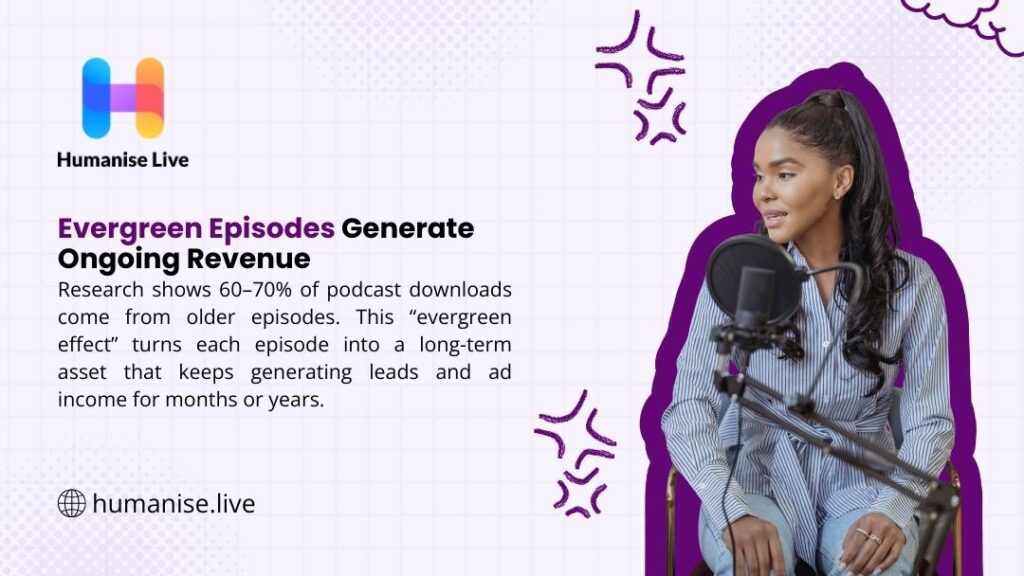
In a business context, a podcast is not just an audio file but a branded media property. Each episode adds to a library that keeps talking to clients, donors, or stakeholders long after launch day. A strong show deepens trust, answers objections before sales calls, and gives partners or community members a place to speak in long form.
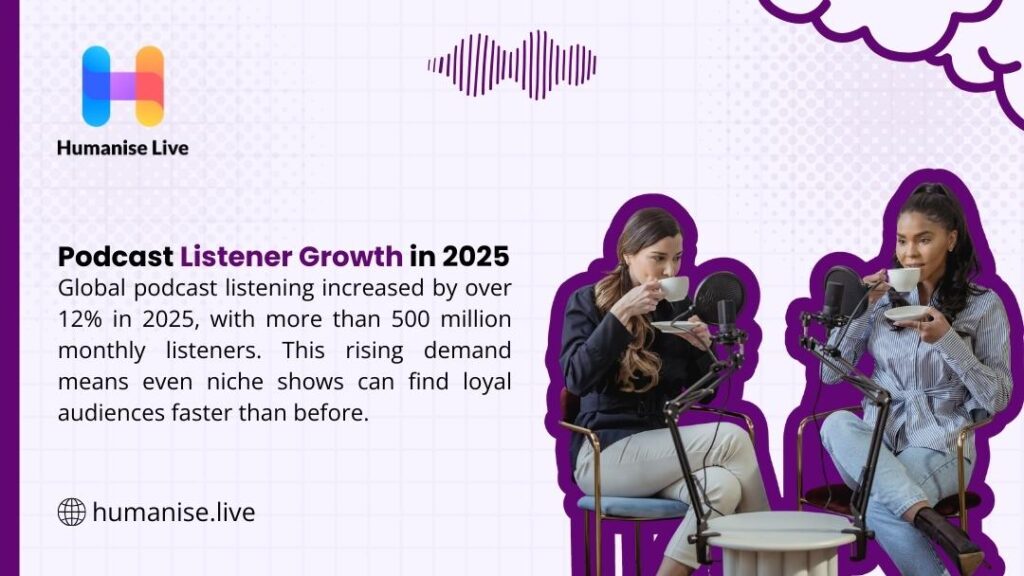
From a revenue point of view, a podcast behaves like a flywheel. New episodes attract fresh listeners, older episodes bring in search and platform traffic, and together they act as a steady engine that warms people up for services, courses, donations, or sponsorship offers. That is why guides on how to make a podcast now treat planning, format, and audience fit as serious work rather than an afterthought.
For readers who have not yet launched, a more technical walk-through sits in Humanise Live’s article on how to start a podcast. The focus here stays on how to make money from podcast work once those foundations are in place or in active development.
How much money can you make from a podcast in 2025
The honest answer: the spread is wide, and most creators sit in the lower bands.
Current industry estimates show a beginner shows that building a modest but loyal audience often sees about $100 to $1,000 per month once ads, small sponsorship, and a few client leads kick in. Established shows in growth mode sit in the $5,000 to $50,000 per month range, where multiple income streams stack together.
A tiny group of top podcasts land six or seven figures per year through licensing deals, major ad campaigns, platform exclusives, or media spin-offs. Recent examples include multi-million dollar agreements with Spotify, SiriusXM, and major streamers.
Average ad pricing tells the same story. Recent data from specialist agencies puts typical podcast ad CPMs around $20 for pre-roll and $25 for mid-roll, which means $20–$25 per thousand downloads for a single ad slot.
A compact view of realistic ranges:
| Show stage | Typical monthly downloads | Main revenue drivers | Approx income band* |
| Early-stage creator | Under 5,000 | Small sponsors, affiliate deals, first clients | $0 – $500 |
| Growing niche show | 5,000 – 50,000 | Sponsors, memberships, services, products | $500 – $10,000 |
| Mature authority shows | 50,000 – 500,000+ | Brand deals, live events, products at scale | $10,000 – $50,000+ |
These are indicative ranges pulled from recent monetization guides and creator reports, not hard guarantees.
When you ask “how much do podcasts make” or “how much money do podcasters make”, the better question is: how strong is the link between the show and a revenue model you control? That is how to make money from podcast projects turn into a concrete plan instead of a wish.
What you need to start a podcast that can make money
A revenue-ready podcast does not always need studio-level production, but it does need a sharp point of view, basic technical quality, and a link to commercial goals.
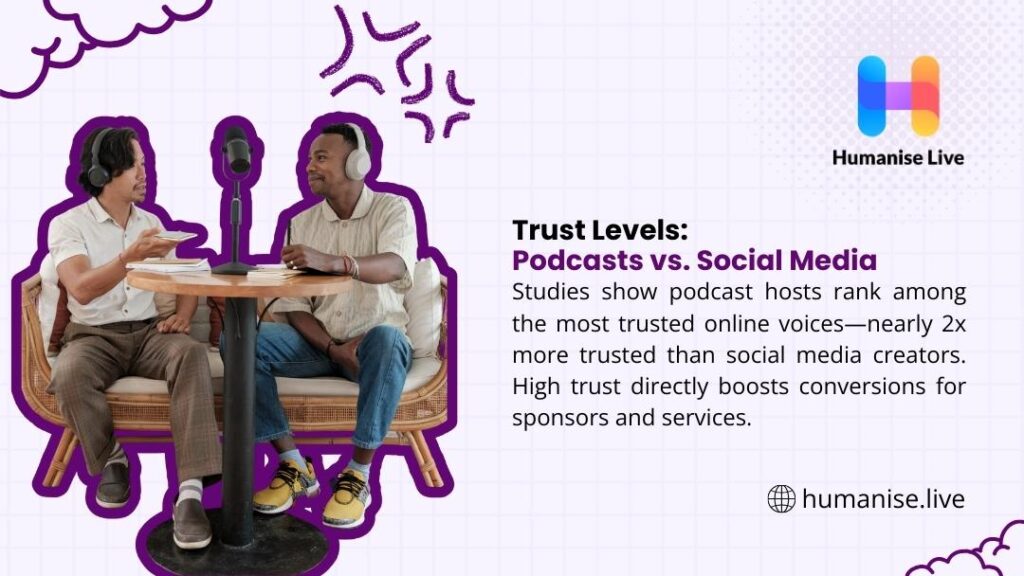
Audience: The first ingredient is a defined audience. Hosts who can describe who they speak to and what those listeners care about already sit ahead of most hobby projects. This turns vague ideas into a proper show concept that sponsors and clients can understand.
Format and Structure: The second ingredient covers format and structure. A clear episode pattern with a consistent length and segment layout trains listeners to stay. Script support helps here; resources that explore how to write episodes, such as the Humanise guide on how to write a podcast script, help hosts avoid rambling and keep each segment focused on value.
Technical side: The third ingredient covers the technical side. A stable microphone, clean monitoring, simple editing, and a reliable host platform form the base. Serious hosts often move from basic software to a more structured workflow supported by a production partner once time pressure grows. That shift turns a fragile solo setup into a repeatable system that can carry sponsorship deals and client work without falling apart. Business Model: The fourth ingredient links the show to a business model from day one. A creator who plans to offer coaching, agency retainers, or digital products behaves differently from a host who only hopes that ads will appear. Brands and charities that think about lead generation or donor journeys from the first episode avoid a lot of wasted work later on. That angle also frames questions such as “how to start a podcast and make money” in practical steps rather than wishful thinking.
Cost breakdown for a revenue-ready podcast
The question How much does it cost to start a podcast? comes up in every planning call. A simple breakdown for a serious starter looks like this:
| Item | Budget option | Mid-range option | Where it affects income |
| Microphone and headphones | $80–$150 | $200–$400 | Clear audio keeps listeners and sponsors. |
| Recording and editing software | Free or under $20/month | $20–$50/month | Smooth workflow shortens production time. |
| Artwork and branding | $50–$150 once | $300–$600 once | Clean visuals help across players and social feeds. |
| Hosting and analytics | $10–$30/month | $30–$80/month | Reliable stats support ad deals and growth plans. |
| Professional editing support | $60–$250 per episode based on scope | $250+ for complex shows | Higher retention, higher ad completion, more trust. |
A host who wants to keep the bill low can begin with a simple setup before bringing in external help. Over time, many teams hand off heavier work, such as multi-track processing and visual treatment, to specialists. Detailed tutorials from Humanise on topics such as how to publish a podcast keep this side transparent, while full-service partners take over once the workload turns into a strain.
Remote workflows also cut both cost and friction. A dedicated remote podcast recording setup allows for guests across cities and time zones without studio rental or travel, which keeps more of the budget available for marketing and production polish.
How does a podcast make money directly?
At the heart of how to make money from podcast projects, you find a small group of direct revenue paths. Most popular guides focus on these, and they still matter because they pay out in cash rather than vague exposure.
The major categories are:
| Direct method | How it works | Typical stage |
| Ads and sponsorships | Brands pay for verbal mentions or produced spots placed in your episodes. Rates usually tie to downloads through CPM deals or flat fees. | Works best once the shows reach stable download numbers. |
| Paid memberships and private feeds | Dedicated listeners pay monthly for bonus episodes, early access, or a private community. Platforms like Patreon handled over $472 million in podcast memberships recently. | Suits creators with loyal communities even at a modest scale. |
| Listener donations and tips | Supporters contribute voluntarily through one-off tips or recurring donations in return for shout-outs or small perks. | Works well in niche or mission-driven spaces. |
| Premium or ad-free versions | Listeners pay for an ad-free feed or extra content, often as an upsell to the public show. | Good where ads cause fatigue, but audience depth runs high. |
Ads and sponsorships without hype
Ads still sit in the centre of how do podcasts make money discussions. Sponsors pay for short segments inside your content, often read by the host because those messages tend to perform better than generic agency scripts and account for a large share of podcast ad revenue.
Recent figures from media buyers suggest typical CPM rates of about $20 for pre-roll and around $25 for mid-roll, with some niches priced well above that, especially in B2B and finance.
A show with 10,000 downloads per episode and two mid-roll slots could therefore sit around $500 per episode at those averages, while a tightly focused show with smaller numbers might still negotiate strong flat-fee deals when each listener represents serious deal value.
A forthcoming Humanise guide on podcast advertising will dive deeper into pricing models, ad tech, and outreach. For now, the rule of thumb stays simple: sponsors care more about fit and trust than raw play counts.
Paid memberships and private feeds
Memberships convert a slice of the audience into a recurring income line. Listeners who treat the show as a trusted voice often accept a small monthly fee for extra episodes, deeper dives, live Q&A sessions, or a private community space.
Data from platforms that specialise in fan support shows tens of thousands of creators earning recurring income at different levels, with podcast hosts among the strongest groups.
For smaller shows, even a few hundred committed supporters at $5–$15 per month can carry costs for gear, hosting, editing, and design. That changes the shape of questions such as “can you make money with a podcast” or “how do you make money on podcasts” from abstract theory to straight percentage maths.
Listener support, donations, and crowdfunded shows
Donation-driven models suit nonprofits, grassroots media, independent journalism, and community projects. In this case, “how do people make money from podcasts” turns into “how does this community keep its favourite show alive?” Support can come through one-off donations, recurring pledges, grant funding, or hybrid schemes that sit alongside sponsorships.
Mission-driven shows also see value beyond direct income. When a podcast helps a charity tell clear stories, supporter trust rises, and campaigns perform better. In those cases, even modest cash support from listeners acts as a bonus on top of larger fundraising outcomes.
How to make money from a podcast with a small audience
With a compact but tuned-in audience, the focus moves from pure ad revenue to business outcomes:
- high-value client work
- consulting or coaching packages
- specialist services and retainers
- online courses and digital products
Many agencies and B2B founders treat the show as a sales engine. Even 500 people who match a perfect client profile often outperform a large anonymous crowd. Humanise works with brands in this space through tailored b2b podcast production that ties editorial plans to pipeline goals instead of vanity metrics.
A short example. A consultant with 2,000 downloads per episode converts two extra clients per month at $2,000 each. That $4,000 in consulting revenue dwarfs what the same volume would pay through CPM ads. In that scenario, how to make money from podcast efforts turns into simple lead flow and conversion math, not a gamble on ad networks.
How to make money from a podcast as a brand or corporate team?
For brands, universities, and charities, the question “how does a podcast make money” rarely centres on direct sponsorship income. A corporate or institutional show usually generates value through lead quality, deal velocity, recruitment strength, and internal alignment.
Public-facing series give sales teams a library of episodes that support outreach and follow-up. Prospects who hear thoughtful case studies or expert roundtables arrive on calls with more context and fewer doubts, which shortens sales cycles. Investor-facing or policy-focused shows help leadership explain complex positions without the noise of daily news cycles.
Internally, private or semi-private podcasts improve communication with staff, volunteers, and partners. Messages that might vanish in crowded inboxes become more accessible when voiced by leaders in audio. That increased clarity helps with retention and change management, which has clear financial implications over time.
Step-by-step plan for how to make money from a podcast in three phases
A clearer route breaks the process into three phases: launch, growth, and monetization. Across each phase, you treat the podcast as an asset that moves closer to profit.
Here is a compact view.
| Phase | Core goal | Main actions | Monetization focus |
| Phase one | Launch with clarity | Define audience, show angle, format, and offer. Ship the first 10–20 episodes on a consistent release rhythm. | None or light experiments; priority rests on proof of concept and feedback. |
| Phase two | Grow reach and trust | Improve episode quality, expand distribution, and repurpose content across social, email, and video. | Early sponsors, affiliate deals, and first client conversions. |
| Phase three | Scale income | Layer multiple streams such as ads, services, products, memberships, and live events. | A balanced, long-term podcast revenue model that matches your brand. |
Technical support that protects your podcast income
People finish more episodes when the sound stays clean, the structure feels tight, and transcripts exist for skimming at work. Three technical layers protect revenue.
First, post-production. Skilled engineers cut filler, level voices, and remove harsh noise. That keeps completion rates high, which keeps sponsors happy and makes binge sessions pleasant. If your team lacks spare hours, this is the type of job that fits a partner who lives in tools for podcast audio editing and multi-track clean-up.
Second, transcripts and accessibility. Search-optimised transcripts move your content into Google and support people who prefer text. Industry studies show that discoverability and accessibility both contribute to higher lifetime value per episode.
Third, monitoring and hosting. Without reliable analytics, you cannot answer basic questions such as “how many podcasts make money in this niche” or “how many podcast listeners are needed to make money at target CPM levels.”
Professional podcast hosting services and structured podcast monitoring give concrete data on downloads, completion, and platform spread, so your pitches stay honest and your decisions lean on facts.
Common reasons podcasts fail to make money
In many cases, the show fails to produce income, not because podcasting cannot work, but because a few core pieces never lined up.
The first issue appears when there is no link between episodes and any paid outcome. If a show never mentions services, products, donations, or sponsors clearly and respectfully, listeners have no path to support it.
The second issue shows up in erratic release schedules. Long gaps between episodes break habits and weaken attention, which harms both audience growth and commercial appeal.
A third pattern involves weak positioning. Vague titles and unfocused topics make it hard for listeners, algorithms, and potential sponsors to understand why the show matters.
The final recurring problem is neglected quality. Harsh audio, confused edits, and missing structure push people back to music or more polished podcasts. Tutorials such as the Humanise guide on how to edit a podcast exist to close that gap, but execution still has to follow.
Once those issues get fixed, questions like “do podcasters get paid” or “how much money can you make doing a podcast” start to receive better answers in real numbers instead of vague hopes.
How Humanise Live helps you build a profitable podcast?
Humanise Live operates as a specialist partner for brands, nonprofits, and creators who want to move beyond theory on how to make money from podcast content. The team begins with strategy sessions that define audience, topic, and commercial goals.
From there, producers manage planning, scheduling, and recording so guests and hosts can focus on insight rather than logistics.
Editors and designers then shape each episode into a finished asset, covering both audio and visual formats. Marketing support carries those assets out into platforms where ideal listeners already spend time. For clients in the agency and corporate world, Humanise also develops revenue-focused series through tailored podcast production that aligns closely with pipeline targets and stakeholder needs.
A podcast that pays its way starts with one serious decision
Every profitable show begins in the same place: a decision to treat podcasting as a real part of the business, not a side experiment. That decision unlocks the time, planning, and investment needed to build a format that listeners trust and sponsors respect.
From there, the numbers become easier to track, the offers grow more confident, and each season feels less like a gamble and more like a long-term asset for your brand or cause.
If you are ready to move from theory into action, this is the moment to map your audience, sketch your revenue model, and decide whether you want a partner at your side. Humanise Live brings deep experience in strategy, production, editing, and growth for both creators and organisations.
The team already supports clients across the UK and beyond through specialist hubs such as its podcast agency, Birmingham-based, and a network that works comfortably with North American time zones.
A structured start today can turn your next quarter of episodes into proof that a podcast can inform, persuade, and earn at the same time.
