
Most podcasts don’t fail because the idea was weak. They stall because the process becomes too heavy to maintain. Learning how to avoid podcast burnout means looking beyond recording and fixing the structure behind your show, from hosting format to release schedule and production workflow.
How to Avoid Podcast Burnout
The phrase “how to avoid podcast burnout” gets searched often for a reason. Podcasting looks simple from the outside. Press record, have a conversation, publish. But once the process begins, the workload grows quietly, recording, editing, writing show notes, scheduling guests, publishing, and promotion.
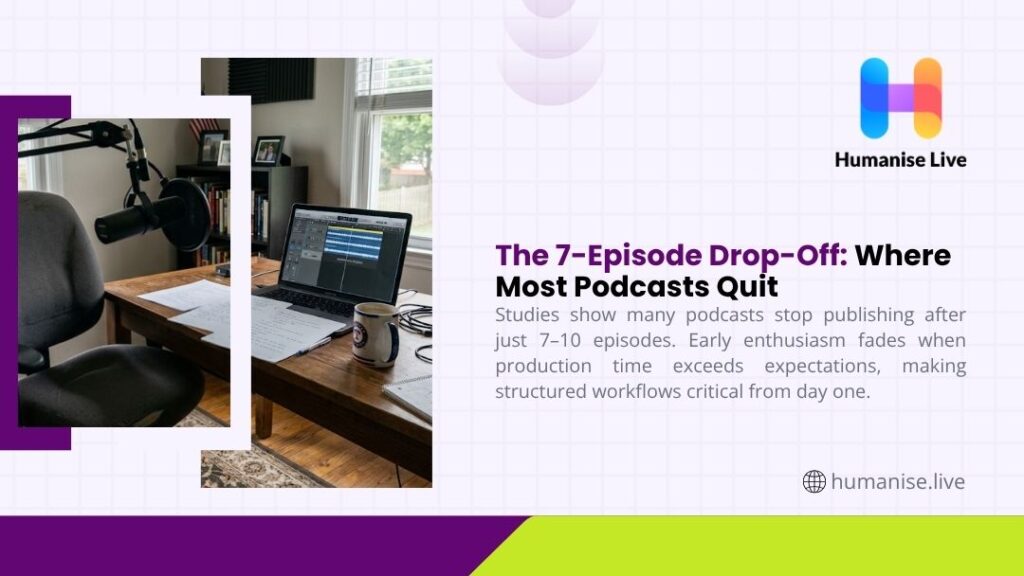
Industry data shows that a large percentage of podcasts become inactive within months, often because creators underestimate the workload involved in recording, editing, and publishing consistently. The pattern is predictable. The enthusiasm is high at the start, but the process becomes difficult to sustain.
Burnout rarely comes from recording itself. It comes from everything wrapped around it. A podcast becomes sustainable when three things align:
| Core Element | What It Controls | Risk if Ignored |
| Release schedule | Consistency | Missed episodes |
| Workflow (recording, editing, writing) | Time efficiency | Overload |
| Hosting model | Energy and continuity | Burnout |
When even one of these breaks, the pressure builds. That’s why understanding how to avoid podcast burnout requires more than motivation. It requires design.
Why Podcast Burnout Happens Faster Than Expected
At the start, most teams underestimate the effort required. They assume recording is the hardest part. It isn’t. The real weight comes from repetition.
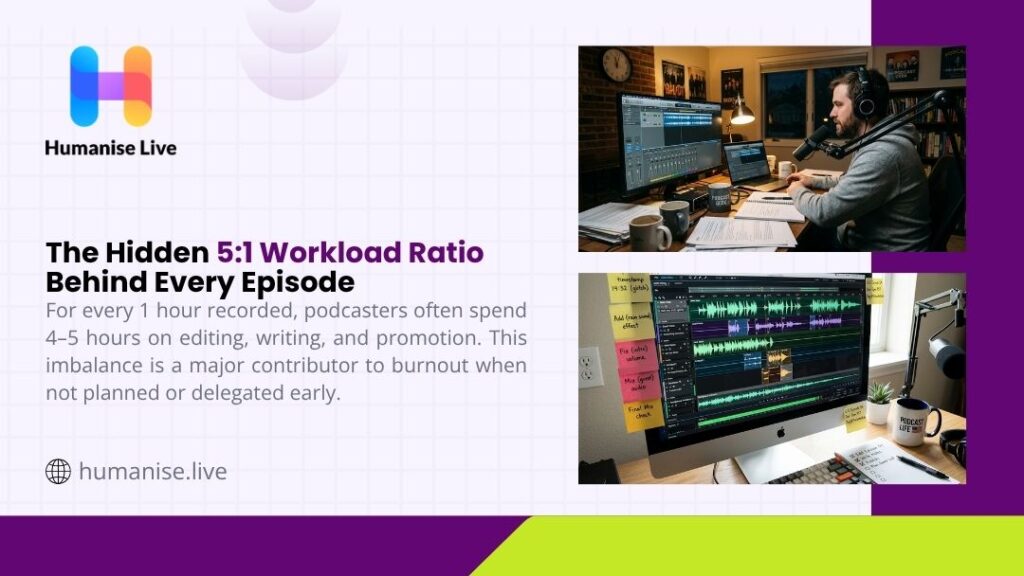
Recording episodes every week sounds manageable. Editing those episodes, writing show notes, and publishing them consistently is where friction begins. Here’s what typically happens behind the scenes:
| Hidden Task | Time Impact | Long-Term Effect |
| Recording, editing, and writing cycle | High | Fatigue builds |
| Guest coordination | Medium | Scheduling stress |
| Content planning | High | Last-minute pressure |
| Promotion and distribution | Medium | Inconsistent growth |
This is why many teams eventually explore structured support like professional podcast production to remove operational pressure and maintain consistency.
Who Should Host Your Podcast (The Real Burnout Question)
A common situation appears in many organizations. A leader wants to launch a podcast. The intent is clear. The audience is defined. But there’s hesitation around one decision: who should host the show?
There may be no obvious internal voice. So the idea of hiring an external presenter, perhaps a professional radio host, starts to feel like the easiest option.
But here’s the problem. The choice of host doesn’t just affect tone. It directly affects sustainability. When thinking about how to avoid podcast burnout, the host’s decision becomes strategic. It determines how much pressure sits on individuals and how consistent the show can remain over time.
Internal vs External Podcast Host: What Works in Practice
The comparison often sounds simple. Internal hosts understand the brand. External hosts bring experience. But the reality is more nuanced.
| Factor | Internal Host | External Host |
| Brand understanding | Strong | Needs onboarding |
| Authenticity | Natural | Can feel distant |
| Time commitment | High | Lower for the team |
| Cost | Lower | Ongoing investment |
| Long-term sustainability | Depends on support | Depends on the budget |
An external host can sound polished from day one. Yet the voice may lack the depth that comes from lived experience within the organization. On the other hand, an internal host carries authority and authenticity but may struggle with time and confidence.
This is why many teams explore hybrid approaches when comparing internal vs external podcast host setups, where the goal is not perfection but finding the right balance between control, flexibility, and performance.
How the Wrong Host Choice Leads to Burnout
Burnout often begins with good intentions. A single internal host takes responsibility. The schedule is set. Episodes begin to roll out. Over time, the workload grows. That host becomes responsible not only for conversations but also for preparation, coordination, and sometimes even review of edits. The result is predictable.
| Scenario | Outcome |
| Single internal host without support | Fatigue increases |
| External host with weak alignment | Engagement drops |
| No clear format | Inconsistency grows |
The issue isn’t effort. Its structure. That’s why understanding how to avoid podcast burnout requires thinking beyond talent and focusing on systems.
Podcast Hosting Models That Reduce Pressure
The most effective podcasts today don’t rely on a single approach. They choose formats that distribute effort and keep energy consistent.
Single Host Model
This model creates a strong identity. One voice, one perspective, one direction. It works well for thought leadership and niche expertise.
However, it places all responsibility on one person. Over time, this creates pressure that can lead to burnout unless supported by structured workflows like remote podcast recording and efficient editing processes.
Duo Host Model
This approach has gained popularity for a reason. Two hosts create a natural rhythm. Conversations feel less forced, and the responsibility is shared.
| Benefit | Impact |
| Shared workload | Reduced pressure |
| Conversational flow | Higher engagement |
| Flexibility | Easier scheduling |
This model often proves more sustainable because it removes the dependency on a single individual.
Rotating Host Model
For larger organizations, a rotating host structure offers flexibility. Different team members contribute based on expertise. Yet without planning, this model can lose consistency. That’s why content planning frameworks, like how to plan podcast content in advance, become essential.
How Structure Prevents Burnout
Consistency doesn’t come from discipline alone. It comes from reducing friction in the process. The most sustainable podcasts follow predictable systems:
| System | Purpose |
| Batch record sessions | Reduce weekly workload |
| Pre-plan topics | Avoid last-minute stress |
| Delegate editing | Save time |
| Standardize show notes | Speed up publishing |
Support services such as podcast editing and podcast marketing services are often used not just for quality, but for sustainability.
Research shows that the biggest challenge isn’t recording, it’s maintaining consistency over time. Most podcasts fail because the process becomes too demanding to sustain. This reflects a broader truth. Burnout is rarely about lack of interest. It’s about overload.
A Smarter Way to Approach Podcast Hosting
The most effective approach combines three elements:
| Element | Role |
| Internal voice | Maintains authenticity |
| External support | Handles production |
| Structured format | Ensures consistency |
This model allows teams to focus on conversations while experienced partners manage the operational side. Companies built around this approach, like those offering corporate podcast production, focus on reducing complexity while keeping the content human.
Why Most Podcasts Lose Momentum?
When podcasts lose consistency, the cause is rarely creative. It is operational. Common patterns include overloaded internal hosts, a lack of production support, and poor planning cycles.
These issues compound over time, leading to missed releases and eventually silence. Understanding how to avoid podcast burnout means addressing these patterns early.
Designing a Podcast That Lasts
A sustainable podcast is not built on energy alone. It is built on repeatable systems. Start by asking practical questions:
- Can your team realistically maintain the release schedule?
- Is the host structure sustainable over twelve months?
- Do you have support for recording, editing, and writing tasks?
Once these questions are answered, the process becomes manageable.
What This Means for Your Strategy
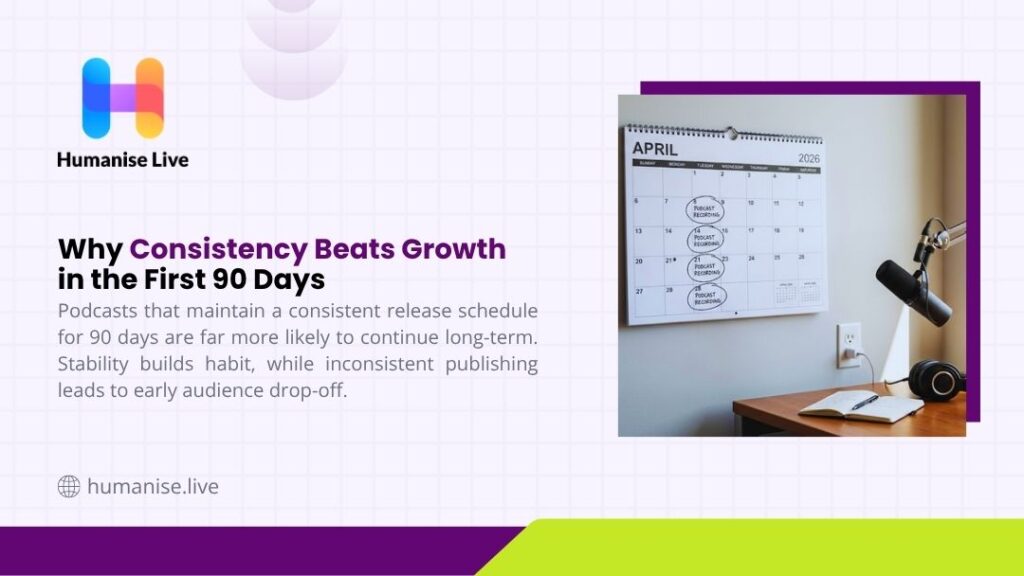
The goal isn’t to produce more content. It’s to produce content that lasts. A well-structured podcast maintains a consistent release schedule, shares responsibility across hosts or systems, and reduces manual workload. And most importantly, it remains enjoyable to create.
A Better Way Forward
Learning how to avoid podcast burnout is less about working harder and more about working differently. Choose a format that distributes effort. Build systems that reduce friction. Support your team where needed.
And if the process still feels heavy, it may be time to explore a more structured approach through partners like Humanise Live, who specialize in long-term podcast sustainability.
Explore how a managed approach to podcasting can support your team while keeping your content consistent, human, and impactful through expert-led podcast services.
