
Choosing between an internal vs external podcast host can shape how your brand sounds, feels, and connects with its audience. This guide breaks down both options, explores real hosting models, and helps you decide what actually works for your business, not just what looks good on paper.
Internal vs External Podcast Host: What’s the Real Difference?
When companies step into corporate podcasting, one question shows up almost immediately: Who should host the show?
An internal podcast host is someone from within your organization. It could be a founder, a marketing lead, or a subject matter expert. They already understand the company culture, the message, and the audience.
On the other hand, an external podcast host is brought in from outside. Often, this is a professional presenter, journalist, or radio-style host hired for delivery and experience.
At first glance, the internal vs external podcast host debate seems like a choice between authenticity and polish. But that’s only part of the story. The real difference lies in how each option shapes trust, authority, and long-term audience connection.
Why Would a Company Want to Use Podcasts?
Before deciding on a host, it helps to understand why companies invest in podcasts in the first place. According to IAB and Edison Research, over 60% of podcast listeners say they feel more connected to brands that produce audio content. That connection matters, especially in internal communications and brand storytelling.
For internal podcasts, companies use them as a communication tool to replace or support town halls, leadership updates, and employee engagement efforts. Internal corporate podcasts allow teams to effectively communicate across locations without relying on long emails or static reports.
Externally, podcasts help brands build authority, share success stories, and bring subject matter experts into meaningful conversations. That’s where the hosting decision becomes critical.
Internal Podcast Host: Benefits, Limitations, and Best Use Cases
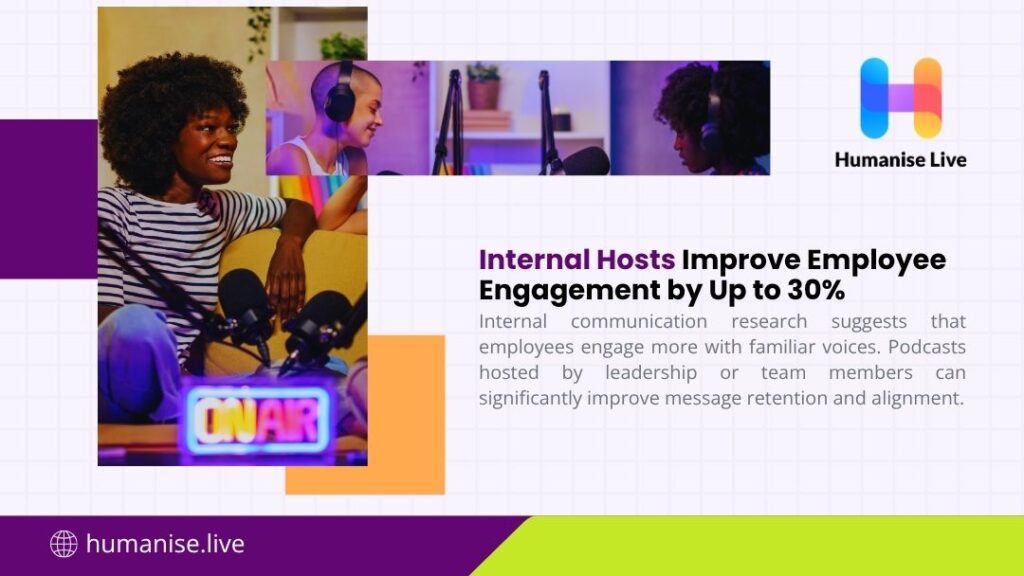
There’s something different about hearing someone from inside the organization speak. It doesn’t feel rehearsed in the same way. It feels closer to how people actually talk in meetings, Slack threads, or informal catch-ups. That familiarity carries over into podcast episodes, especially when the goal is to build trust rather than just deliver information.
In internal podcasting, this matters even more. Employees already know the voices. They understand the context. So when an internal host speaks, the message lands faster and with less resistance.
That said, not every internal expert is naturally comfortable behind a microphone. Hosting is a skill. Some grow into it quickly, others take time. Here’s how this typically plays out in practice:
| Area | Internal Podcast Host Reality |
| Voice & tone | Natural, conversational, often more relatable |
| Subject knowledge | Strong, based on real experience inside the company |
| Audience connection | Builds gradually but tends to be deeper |
| Delivery skills | Can vary widely depending on confidence |
| Time commitment | Often underestimated at the start |
| Long-term value | High, especially for internal company podcasts |
What stands out most is how internal hosts shape company culture through content. In internal corporate podcasts, they don’t just share updates; they reinforce how people think, speak, and align across teams.
The limitation isn’t capability. It’s support. Without structure, even the most knowledgeable internal host can struggle to keep episodes consistent. That’s where planning, scripting, and production guidance become essential.
External Podcast Host: Benefits, Limitations, and When It Makes Sense
An external host often brings a level of ease that’s hard to ignore. They know how to carry on a conversation, when to pause, and when to push a question further. For organizations starting from scratch, this can feel like a safer route.
But here’s what tends to happen over time. The show sounds polished, but not always personal. The host may guide the conversation well, yet miss subtle context that only someone inside the organization would catch. Still, there are situations where this approach works well.
| Area | External Podcast Host Reality |
| Presentation quality | Consistent and confident |
| Interview skills | Strong, especially with guests |
| Brand familiarity | Requires onboarding and ongoing input |
| Audience perception | Professional but sometimes distant |
| Speed to launch | Faster, less internal preparation needed |
| Cost over time | Higher, especially for ongoing shows |
External hosts tend to suit short-term series, campaign-led podcasts, or situations where no internal voice feels ready to step forward.
The risk isn’t in hiring an external host. It’s relying on them to carry the entire identity of the show. Without internal involvement, the podcast can drift away from the brand it’s meant to represent.
Internal vs External Podcast Host (Comparison Table)
When you place both options side by side, the trade-offs become clearer. It’s less about which is better overall and more about what fits your specific goal.
| Factor | Internal Podcast Host | External Podcast Host |
| Authenticity | Strong and natural | Moderate |
| Brand alignment | Deep understanding | Requires onboarding |
| Cost over time | Lower | Higher |
| Delivery quality | Varies | Consistent |
| Audience trust | Builds gradually | Depends on the presenter |
In reality, most organizations don’t sit entirely on one side. They move between these options depending on the stage of the podcast and the people available to lead it.
Different Podcast Hosting Models That Actually Work
The question isn’t just internal vs external podcast host. It’s also how the show is structured around that host. A single host format works well when the goal is clarity and consistency. One voice, one perspective, and a steady rhythm across episodes. This is often used in internal podcasts where communication needs to be direct.
Then there’s the duo format, which has become increasingly common. Two hosts create a more natural flow. One leads, the other reacts, and the conversation feels less formal. For many listeners, this makes episodes easier to follow and more enjoyable over longer durations.
Rotating hosts brings variety. Different team members step in depending on the topic. This can work well in organizations with multiple subject matter experts, though it requires strong coordination to avoid inconsistency.
Another model combines an external host with internal contributors. The host manages structure, while internal voices bring depth. This can be effective early on, especially when teams are still building confidence.
There isn’t a single correct model. What matters is how well it reflects the purpose of the podcast and the people behind it.
Which Podcast Host Model Builds More Trust?
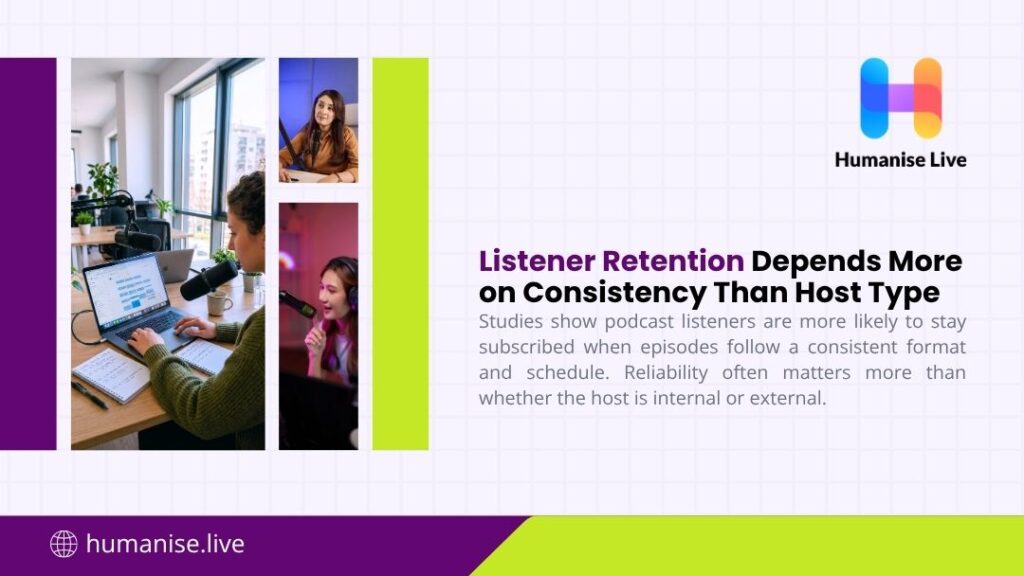
Trust doesn’t happen all at once. It builds through repetition, familiarity, and tone. Listeners tend to return to voices they recognize. Not because those voices are perfect, but because they feel consistent. That’s why internal hosts often gain stronger long-term engagement, particularly in internal company podcasts.
A duo format can also strengthen trust. Two voices create balance. If one leans more formal, the other can soften the tone. Over time, that dynamic becomes part of the show’s identity.
External hosts can establish credibility quickly, especially in the early stages. But maintaining that trust depends on how well they connect with the brand’s message. In internal communications, where the aim is to bring people together, internal hosts usually hold the advantage. They don’t need to learn the audience. They are already part of it.
Internal Podcasts vs External Shows: Does Hosting Choice Change?
The purpose of the podcast changes everything. Internal podcasts are built to support communication. They replace long emails, reinforce company culture, and create a shared understanding across teams. In this context, an internal host feels more natural. The message comes from within, not from an outside voice.
External-facing shows operate differently. They focus on growth, visibility, and positioning. Here, both internal and external hosts can work, depending on the style of the show. Companies with internal corporate podcasts often prioritise clarity over performance. External shows, especially in corporate podcasting, tend to balance storytelling with structure.
So yes, the hosting choice does change, but only when the objective changes with it.
Cost Comparison: Internal vs External Podcast Host
Cost isn’t just about money. It’s also about time, effort, and long-term return.
| Cost Area | Internal Host | External Host |
| Time investment | High initially | Lower internally |
| Training needs | Moderate | Minimal |
| Production support | Often required | Usually bundled |
| Long-term ROI | Strong | Moderate |
It’s worth noting that hosting is only one part of the equation. Production quality, distribution, and promotion play equally important roles. Many companies choose to combine internal hosting with professional support, such as a dedicated podcast production service, to bridge the gap.
What Most Companies Get Wrong About Podcast Hosting
A common assumption is that a better voice leads to a better podcast. That’s rarely the case. What actually keeps listeners engaged is relevance. If the content speaks directly to them, they stay. If it feels distant, they leave, even if the delivery is polished.
Another issue is overcomplicating the decision. Some teams spend weeks debating who should host, while overlooking the structure of the show itself. Without a clear format, even the most experienced host will struggle.
There’s also a tendency to underestimate internal capability. Many organizations already have people who can host effectively. They just haven’t been given the right support or framework to do so.
How to Choose the Right Podcast Host for Your Business
The decision around internal vs external podcast host should come down to a few practical questions. Do you have someone internally who understands the subject matter and is willing to learn? If yes, an internal host is often the better long-term choice.
Is speed more important than depth? In that case, an external host may help you get started faster. Are you building an internal communication tool or a public-facing show? Internal podcasts almost always benefit from internal voices.
If you’re unsure, starting with a clear structure can help. Understanding how to start a podcast or planning your format can make the decision easier.
When a Hybrid Approach Works Best
In many cases, the strongest podcasts don’t rely on one approach alone. An internal host brings authenticity. External support brings structure. Together, they create a balance that’s hard to achieve otherwise.
This could mean an internal host leading the conversation while production, editing, and strategy are handled externally. It could also involve coaching internal hosts to improve delivery without replacing them.
This approach works particularly well for organizations that want to sound natural but still maintain a high production standard. It also aligns with how modern podcasting is evolving. Less focus on perfection, more focus on meaningful conversations that people actually want to listen to.
How to Set Your Podcast Up for Success Beyond the Host
Even the best host won’t carry a podcast on their own. Structure matters. Planning matters. Knowing how episodes flow from one to the next matters just as much as who is speaking.
Understanding how to shape conversations, organize topics, and maintain consistency makes a noticeable difference. Many teams find that learning how to write a podcast script or planning content improves not just the quality of episodes, but also the confidence of the host.
Promotion also plays a role. Without a clear plan for how to promote your podcast, even strong content can go unnoticed. Even technical decisions, such as choosing the right podcast hosting services, can influence performance. The host is the voice of the show, but the system behind the host is what keeps it running.

Which Should You Choose?
The internal vs external podcast host decision isn’t about right or wrong. It’s about fit. Internal hosts bring authenticity, trust, and long-term connection. External hosts offer structure, speed, and presentation skills.
For most purpose-driven companies, internal voices supported by professional production tend to deliver the strongest results. They sound real, feel consistent, and build relationships over time.
If you’re still weighing your options, starting small can help. Test a format, record a pilot episode, and see what feels natural. From there, the right hosting approach often becomes clear.
And if you need support along the way, Humanise Live helps teams turn those early ideas into structured, high-quality podcasts, without losing the human voice that makes them worth listening to.
Because in the end, it’s not about choosing between an internal vs external podcast host. It’s about choosing a voice people actually connect with.
