
Choosing who should host a podcast is not a small decision. It shapes how your audience connects with your brand, how your message lands, and whether your show grows or fades. This guide explores internal and external hosts, different hosting formats, and how to choose the right podcast host for long-term success.
Who Should Host a Podcast
When people ask who should host a podcast, they often expect a simple answer. In reality, it depends on what the podcast is meant to do. A show built for entertainment needs something very different from one designed to build authority or trust.
A podcast host becomes the voice of your brand. That voice can feel natural and credible, or distant and overly polished. That difference alone can affect whether listeners return for the next episode or switch off halfway through.
So the real question is not just who should host a podcast, but what kind of voice your audience will trust over time.
What Is a Podcast Host and Why Does It Matter
A podcast host is more than a presenter. The podcast host shapes the tone, guides conversations, and carries the responsibility of keeping listeners engaged. In many cases, the host becomes the identity of the show.
If you look at any podcast host job description, it often includes interviewing guests, structuring episodes, and maintaining consistency. Yet the real role goes further. A good host knows when to step in, when to stay quiet, and how to make a guest feel comfortable enough to share something meaningful.
According to Edison Research, podcast audiences show unusually high levels of trust and engagement compared to other media formats. That connection is rarely built through performance alone. It comes from authenticity.
And that’s why deciding who should host a podcast matters more than most people expect.
Internal vs External Podcast Host: Which One Works Best?
One of the most common situations comes from leadership teams who want a podcast but feel no one internally fits the role. The first instinct is often to bring in an external podcast presenter, perhaps someone with broadcasting experience.
It sounds logical. But it doesn’t always work the way people expect. Here is how internal and external hosts compare in practice:
| Factor | Internal Host | External Host |
| Brand understanding | Deep and instinctive | Learned over time |
| Authenticity | Strong and natural | Often rehearsed |
| Presentation skill | Variable | Usually polished |
| Audience trust | Builds quickly | Takes longer |
| Cost | Lower long-term | Higher ongoing |
| Flexibility | High | Limited |
An internal host brings context, lived experience, and credibility. An external host brings confidence, structure, and broadcast-style delivery. Both can work, but they serve different goals.
Pros and Cons of Hiring an External Podcast Presenter
Bringing in an external podcast presenter often feels like the safest option, especially when no one internally seems ready. It removes the immediate pressure from the team. There’s someone experienced, someone who knows how to carry on a conversation without hesitation.
But here’s what tends to happen in practice. The show sounds good, yet something feels slightly off. The host understands the format, but not always the deeper context behind the conversations. That gap becomes more noticeable over time. To look at it more clearly:
| Aspect | Where External Hosts Work Well | Where It Can Fall Short |
| Delivery | Confident, structured, polished | Can feel rehearsed rather than natural |
| Audience experience | Smooth listening experience | Less emotional connection over time |
| Brand alignment | Learns positioning gradually | Lacks instinctive understanding |
| Speed to launch | Faster setup | Less long-term flexibility |
| Cost | Predictable upfront | Adds ongoing expense |
| Interview depth | Strong general questioning | May miss nuanced insights |
An external host can absolutely help get a show off the ground. For some formats, especially media-style or storytelling-heavy podcasts, it can work well.
Still, if the goal is to build trust or thought leadership, that distance between the host and the organization can quietly limit the impact.
Why Many Brands Prefer an Internal Podcast Host
There’s a reason many organizations eventually shift toward an internal podcast host, even if they started elsewhere. An internal voice carries something difficult to replicate: context. Not scripted context, but lived experience. That shows up in how questions are asked, how stories are framed, and how conversations evolve.
When a host understands the day-to-day realities of the business, discussions feel less like interviews and more like real exchanges. Guests tend to open up more. Conversations go beyond surface-level talking points.
There’s also a consistency factor. Over time, listeners begin to associate the host with the brand itself. That familiarity builds trust, and trust keeps people coming back.
In purpose-driven organizations, especially, this matters even more. Audiences are not just listening for information. They are listening for intention, for values, for perspective. An internal host is far more likely to reflect that without needing to learn it.
What often surprises teams is that hosting is a skill that develops quickly. With the right support and structure, someone who feels hesitant at the start can become one of the strongest assets of the show.
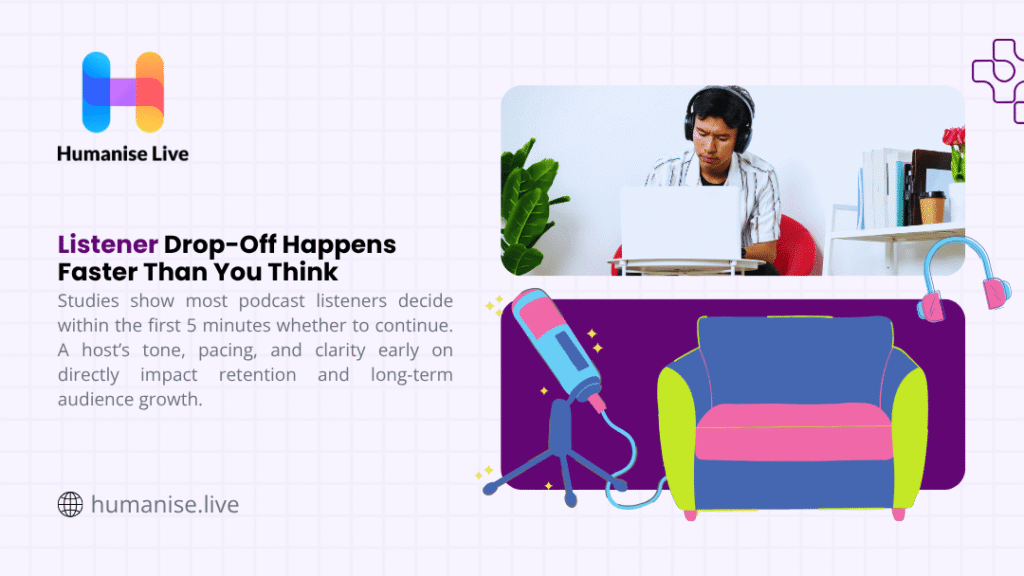
Different Podcast Hosting Models That Work Today
The question of who should host a podcast does not stop at choosing a person. It also involves choosing a format. Different hosting models create different listening experiences.
Some podcasts rely on a single host, while others experiment with shared or rotating formats. Each approach shapes how the audience connects with the show.
| Format | Best Use Case | Strength |
| Solo host | Personal brand or expert-led show | Clear authority |
| Co-host (duo) | Conversational podcasts | Natural engagement |
| Rotating hosts | Larger teams or organizations | Variety and flexibility |
| Hybrid model | Business podcasts with guests | Balance of structure and insight |
The duo format, in particular, has gained traction. A podcast cohost can create a conversational dynamic that feels less formal and more relatable. It also reduces pressure on a single presenter and allows for different perspectives.
Rotating hosts can work well in organizations with multiple experts. However, consistency becomes a challenge if not managed carefully.
Should You Choose a Podcast Co-Host or Podcast Partner?
There’s been a noticeable shift in how podcasts are hosted. The single-host format still works, but many of the most engaging shows today involve two voices rather than one.
A podcast cohost changes the energy of the conversation. Instead of a question-and-answer dynamic, it becomes something more fluid. Ideas bounce back and forth. There’s space for disagreement, humour, and spontaneity.
That said, not every co-host pairing works. The dynamic needs balance. If both hosts compete for control, the conversation can feel chaotic. If one dominates, the other fades into the background.
A podcast partner works best when each person brings something distinct. One might focus on structure and direction, while the other adds depth or curiosity. Together, they create a rhythm that feels natural to listen to.
There’s also a practical benefit. Sharing the role reduces pressure. Hosting regularly can be demanding, and having a second voice makes maintaining consistency easier.
For organizations unsure about a single internal host, a co-host model can be a strong middle ground. It spreads responsibility while keeping the voice authentic.
Key Qualities of a Great Podcast Host
A strong podcast host is rarely the most polished speaker in the room. What sets them apart is how they handle conversation, not just how they sound. Some qualities become obvious only after a few episodes. Others show up immediately.
| Quality | What It Looks Like in Practice | Why It Matters |
| Clarity | Speaks in a way that feels easy to follow | Keeps listeners engaged |
| Listening ability | Responds to what is said, not what was planned | Creates better conversations |
| Curiosity | Asks thoughtful, open-ended questions | Leads to deeper insights |
| Consistency | Maintains tone and structure across episodes | Builds familiarity |
| Emotional awareness | Picks up on subtle cues from guests | Strengthens connection |
| Adaptability | Adjusts flow when conversations shift | Keeps episodes natural |
What’s often overlooked is that none of these qualities requires a background in media. They come from experience, preparation, and a willingness to improve. A host does not need to sound perfect. They need to sound real.
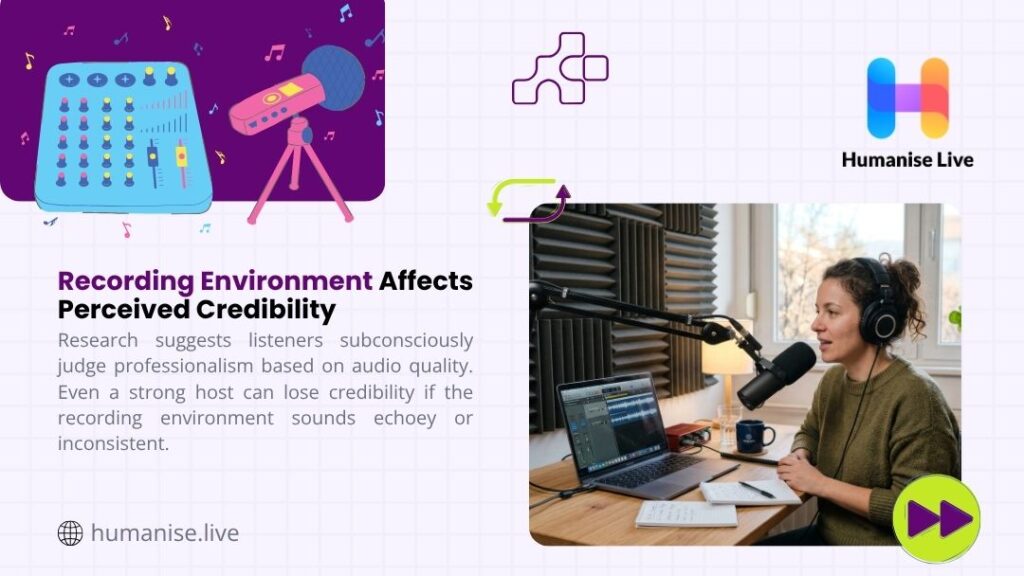
How to Choose a Podcast Host for Your Business
Choosing who should host a podcast becomes easier when you step back and assess your priorities. Are you trying to build authority, generate leads, or share stories? A simple framework can help guide the decision:
| Question | If Yes | If No |
| Do you have someone internally who understands your audience? | Choose an internal host | Consider external |
| Is authenticity central to your brand? | Internal host works best | Either option |
| Do you need a highly polished delivery from day one? | External may help | Internal is fine |
| Is long-term cost a concern? | Internal preferred | External possible |
This approach keeps the focus on outcomes rather than assumptions.
What Actually Works in Today’s Podcast Landscape
The podcast space has shifted quietly over the past few years. Production standards have improved across the board, so listeners no longer judge shows by audio quality alone. At the same time, podcast consumption continues to grow globally, with hundreds of millions of listeners tuning in across different platforms, making the space more competitive than ever.
What tends to stand out now is the voice behind the microphone. Shows that feel overly scripted can come across as distant, while conversations that sound natural and unscripted often hold attention for longer. There’s a level of unpredictability that makes the experience feel more human.
Another noticeable change is the rise of conversational formats. Duo-host podcasts and hybrid models are becoming more common, particularly in business and B2B spaces. These formats allow for different perspectives, more personality, and a more relaxed flow compared to single-presenter shows.
Audience behaviour has also evolved. Research from Edison shows that podcast discovery increasingly happens through social media and video platforms, rather than traditional listening apps alone. This shift means the host’s presence often extends beyond the podcast itself, appearing in clips, short-form content, and other formats across platforms.
In practice, what works today is not just strong production. It’s a host who feels consistent, believable, and closely connected to the message they are sharing.
Mistakes to Avoid When Choosing a Podcast Host
Some of the most common issues don’t show up immediately. They appear after a few episodes, once the initial excitement fades.
| Mistake | What Happens | Long-Term Impact |
| Choosing based on confidence alone | Host sounds polished but lacks depth | Weak audience connection |
| Ignoring brand voice | Content feels disconnected from the organization | Reduced trust |
| Switching hosts too often | No consistency in tone or style | Listener drop-off |
| Over-relying on scripts | Conversations feel rigid | Lower engagement |
| Underestimating time commitment | The host struggles to maintain the schedule | Inconsistent publishing |
Avoiding these issues often comes down to clarity at the start. Understanding what the podcast is meant to achieve makes it easier to choose the right person for the role.
How Hosting Style Impacts Growth and Visibility
The way a podcast is hosted affects more than just the episode itself. It shapes how the content travels beyond the audio. A natural, conversational hosting style tends to produce moments that translate well into short clips. Those clips perform better on social media because they feel unscripted and relatable.
In contrast, heavily structured delivery can be harder to repurpose. It may sound polished, but it often lacks standout moments that capture attention quickly. Hosting style also influences guest quality. Guests are more likely to return or recommend the show when they feel the conversation was genuine rather than transactional.
Over time, this creates a network effect. Better conversations lead to better content, which leads to wider reach. This becomes especially important when working with professional support such as podcast marketing services.

Building a Podcast Around the Right Host
Once the right host is in place, the rest of the podcast begins to take shape more naturally. Content planning becomes less about filling slots and more about building a narrative. Guest selection improves because the host knows what kind of conversations they want to have. Even the episode structure becomes clearer.
This is where many teams realize that hosting is not just one role within the process. It’s the centre point around which everything else moves.
For those at an early stage, understanding how to start a podcast helps create a clear structure and direction for each episode. From there, refining the production process through podcast production support ensures the technical side aligns with the creative vision.
Consistency across episodes also depends on reliable systems, including tools for remote podcast recording, especially when teams and guests are not in the same location. A strong host simplifies these decisions because they provide a clear point of reference.
Choosing the Right Voice: What Your Podcast Really Needs
So, who should host a podcast? In most cases, the answer is simpler than it first appears. It should be someone who understands the message, believes in it, and can carry on a conversation without forcing it.
That does not always mean the most confident speaker in the room. It often means the person closest to the work, the ideas, and the audience. If there is no obvious internal choice, that does not automatically mean you need to outsource the role. Sometimes, the better approach is to build that capability rather than replace it.
There are also different ways to approach it. A single host can provide clarity. A rotating panel can offer variety. A duo format can create a more natural rhythm. Each model works when it fits the purpose of the show.
What matters most is alignment. When the host, the message, and the audience are in sync, the podcast starts to feel less like content and more like a conversation.
And if you’re at the point where you’re weighing these decisions, it may help to have a bit of guidance along the way. Humanise Live works closely with teams to shape not just the production, but the voice behind it, so the podcast feels as genuine as the ideas it’s built on.
