
Five years ago, most executives couldn’t even pronounce “podcast” correctly. Now these same companies are throwing serious money at podcast advertising – and for good reason.
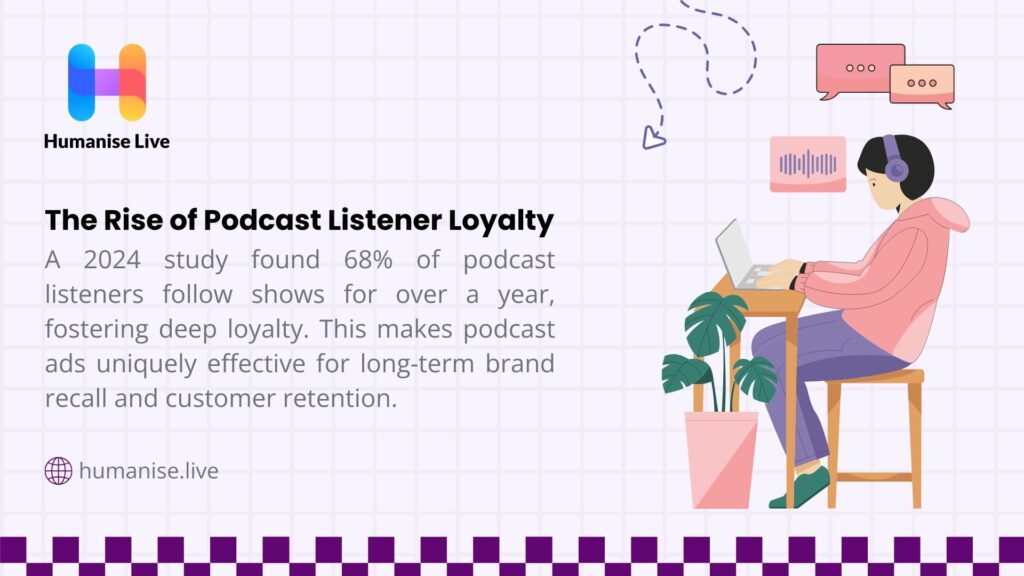
Over 100 million Americans listen weekly (up 110% from last year), and they’re spending around 30+ minutes per episode on average.
Think about how long someone looks at a Facebook ad or a banner. Seconds, maybe? Podcast listeners are different. They chose to download that episode, they’re probably doing something else while listening (commuting, working out, walking the dog), and they develop genuine relationships with hosts.
75% of listeners trust podcast hosts. When Joe Rogan or whoever talks about a product, 63% of his audience goes and buys it. Try getting those conversion rates from banner ads.
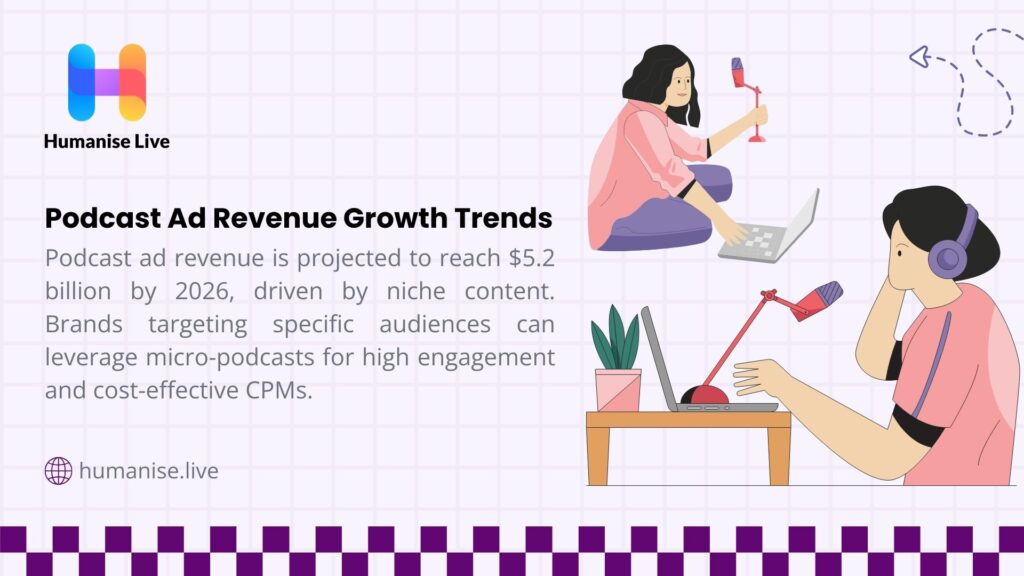
Podcast advertising revenue hit over $4 billion last year and keeps climbing. Smart brands figured out that podcast listeners are basically the holy grail: engaged, affluent, and willing to act on recommendations. No wonder advertising spend jumped 32.8% year-over-year.
How This Whole Thing Works
The podcast advertising used to be pretty simple. Call up a popular show, negotiate a rate, and send them some talking points. Done. Now it’s something much more sophisticated and complicated.
Revenue growth has been steady even as the market matures. That 32.8% increase in ad spend shows real momentum. But CPMs are actually down about 11% from their 2022 peaks. The average cost for a 60-second spot is around $23 now.
Some people see falling CPMs as a bad sign. Actually, it’s great news for advertisers. The inventory expanded faster than demand, which means better deals for brands smart enough to move quickly.
The audience demographics keep improving, too. Millennials and Gen Z make up about 62% of podcast listeners.
But there are over 5 million podcasts now, compared to maybe 550,000 just six years ago. All that choice means more competition for listener attention. The brands winning in this space understand that podcast advertising is about reaching the right people in the right context.
The Main Ways Companies Advertise on Podcasts
Host-Read Ads
Despite all the technology advances, nothing beats a trusted host personally recommending something. Host-read ads command premium rates – sometimes hundreds of dollars per thousand listeners – because they actually work.
The best host-read ads don’t even sound like advertisements. They sound like genuine recommendations from someone the listener already trusts. Marc Maron is talking about his therapy app. Bill Simmons discusses his favorite betting site. These feel authentic because, mostly, they are.
The downside is that host-read campaigns take forever. Brands need to brief hosts, review scripts, and sometimes record multiple versions. It’s labor-intensive compared to other digital channels. But when 63% of listeners actually buy stuff their favorite hosts recommend, the extra effort pays off.
Podcast advertising through a host read also creates lasting value. Unlike programmatic ads that disappear after campaigns end, host-read endorsements stay embedded in episodes forever. Popular episodes from years ago still drive conversions.
Programmatic Ads
Early programmatic podcast advertising was pretty terrible. Random ads are inserted into random shows with zero context. Like hearing mattress commercials during true crime podcasts about serial killers.
Modern platforms can target based on listening behavior, demographics, location, even time of day. The targeting options rival Facebook and Google now.
About 72% of media buyers plan to increase programmatic podcast spending this year. The appeal is obvious: massive scale with surgical precision. Instead of negotiating with individual shows, brands can reach millions of listeners across thousands of podcasts instantly.
Dynamic ad insertion makes everything more flexible, too. Campaigns can be updated in real-time without re-editing episodes. Seasonal promotions, creative testing, product launches – all possible without the lengthy timelines of traditional host-read spots.
Hybrid Models
The newest trend combines host authenticity with programmatic efficiency. Hosts record endorsements in advance, then algorithms decide when and where to place them based on audience data.
This approach gives brands host credibility with programmatic scale and targeting. It’s still pretty new, but early results look promising for companies wanting a broader reach without losing the personal touch.
Ad Placement
Where ads appear in episodes makes a huge difference. Mid-roll ads consistently perform best because listeners are already invested in the content. They’re less likely to skip or tune out compared to pre-roll spots.
Pre-roll ads face the biggest challenge. Listeners haven’t committed yet and might bounce if the ad doesn’t grab them immediately. But they can work well for brand awareness or time-sensitive offers that benefit from maximum reach.
Post-roll ads work best for direct response campaigns. Someone who just listened to a 45-minute episode clearly cares about the topic and might be more receptive to related products or services.
Targeting has gotten much more sophisticated beyond just picking relevant shows. Modern platforms can target based on listening patterns (daily listeners vs. weekend bingers), device usage (commuters vs. at-home listeners), and content preferences that indicate purchase intent.
Measuring Results
Podcast advertising measurement is trickier than other digital channels, but the tools keep improving.
Promo codes remain surprisingly effective for tracking conversions. They provide clear attribution while giving listeners incentives to act. The best codes are memorable and show-specific – “ROGAN15” performs better than generic “PODCAST15.”
Attribution technology has advanced significantly. Modern systems can track podcast ad exposure and connect it to website visits, email signups, and purchases. It’s not perfect; offline listening creates gaps, but it’s approaching the measurement standards of other digital channels.
Brand studies matter more for podcasts than other media. Since many campaigns focus on awareness and consideration rather than immediate clicks, surveys measuring brand recall and purchase intent provide valuable insights beyond direct response metrics.
What’s Changing Right Now
Multi-Platform Integration
Podcast advertising doesn’t exist in isolation anymore. The most successful campaigns extend beyond audio into video, social media, and live events. Popular hosts have audiences everywhere, and smart brands activate those relationships across multiple touchpoints.
Video podcasts create additional opportunities. Product placement, branded segments, visual companion content – all possibilities that extend beyond traditional audio advertising. Research shows 84% of podcast listeners have taken action after seeing brands promoted across multiple platforms in podcast-first campaigns.
Technology Improvements
AI and machine learning are making podcast advertising more efficient. Real-time optimization adjusts campaigns based on performance data and listener behavior. Enhanced targeting uses predictive analytics to identify listeners most likely to respond to specific messages.
Measurement tools keep getting better, too. Advanced attribution connects podcast exposure to long-term customer value, not just immediate conversions. This helps justify brand-building campaigns that might not drive instant sales but create valuable customer relationships over time.
Getting Started With Ads
Successful podcast advertising starts with realistic expectations. Brand awareness campaigns need different approaches than direct response efforts. Many companies make the mistake of trying to accomplish everything simultaneously instead of focusing on what matters most for their business.
Budget allocation should include testing phases. Starting with a mix of host-read and programmatic ads reveals what resonates with target audiences. Initial campaign data informs larger investments later.
Creative development requires different skills from visual advertising. Without beautiful imagery, the message needs to work through audio alone. Strong storytelling, clear value propositions, and compelling calls-to-action become essential.
Choosing Partners
Platform selection depends on campaign goals and internal capabilities. Spotify Ad Studio offers self-serve simplicity for straightforward campaigns.
Google Ad Manager provides enterprise-level targeting and reporting. Specialized podcast networks often maintain better relationships with premium shows but charge higher fees.
Direct publisher relationships can unlock opportunities unavailable through programmatic platforms. Custom integrations, exclusive sponsorships, preferred placements – these still require old-fashioned relationship building and phone calls.
Agency partners make sense for complex campaigns or companies lacking internal audio expertise. The best agencies understand podcast culture and maintain established relationships throughout the ecosystem.
| Approach | Works Best For | Typical CPM Range | Time to Launch | Tracking Quality |
| Host-Read | Complex products, trust-building | $50-300+ | 2-4 weeks | Basic |
| Programmatic | Simple offers, testing, scale | $15-45 | Days | Advanced |
| Hybrid | Authenticity + efficiency | $25-100 | 1-2 weeks | Good |
The podcast advertising opportunity in 2025 is legitimate. Better targeting, multiple format options, and improved measurement make audio advertising more accountable than ever.
Success requires understanding that podcasts aren’t just another digital channel. They’re intimate conversations between hosts and audiences. Brands that respect this dynamic and add genuine value will succeed. Those treating podcasts like banner ad inventory will waste money.
Audiences keep growing, technology keeps improving, and early movers are establishing strong positions. Companies figuring out podcast advertising now will have significant advantages as the medium expands further.
Are You Serious About Audio Marketing?
Humanise knows how to create podcast content that connects with real people. Whether companies need to start podcasting from scratch, want professional podcast production support, or need help developing content that works, the team has done this before.
Audio is where the attention is moving. Companies waiting around while competitors build podcast audience relationships will spend years catching up in a medium where trust and authenticity determine everything.
Talk to Humanise about audio marketing
For More:
