
Speed matters in podcasting, but rushing the process often leads to messy audio, inconsistent publishing, and audience drop-off. This guide explains how to speed up podcast production in a practical, sustainable way by improving planning, recording quality, editing workflow, and team coordination.
How to Speed Up Podcast Production?
If you’re wondering how to speed up podcast production, here’s the truth: faster output doesn’t come from editing quicker alone. It comes from reducing friction across the entire podcast production process.
Most delays happen before editing even begins, such as unclear structure, poor audio quality, scattered files, or slow approvals. Fix those, and editing becomes simpler, shorter, and far less stressful.
For brands running consistent shows, the goal isn’t speed at any cost. It’s building a system where each episode flows smoothly from planning to publishing without unnecessary rework.
That’s why teams often move toward structured workflows or external support through a professional podcast production service, not because they can’t edit, but because time disappears fast without a system.
Why Podcast Production Slows Down in the First Place
A team starts a podcast, thinking the hardest part will be recording or maybe editing. But after a few episodes, things begin to drag. Episodes take longer. Deadlines slip. What felt simple suddenly feels like a process with too many moving parts.
And most of the time, the slowdown doesn’t come from one big problem. It’s a collection of small inefficiencies that quietly stack up. Before fixing speed, it helps to understand where time actually goes.
| Bottleneck | What Happens | What Fixes It |
| Weak episode planning | Long recordings, messy structure | Clear outlines and scripts |
| Poor recording setup | Background noise, uneven audio | Better mic setup and remote tools |
| Inefficient podcast editing | Re-editing the same section repeatedly | Structured editing workflow |
| Scattered files | Lost audio, version confusion | Organized folder systems |
| Endless approvals | Delayed publishing | Defined sign-off process |
| No batching | Constant last-minute pressure | Recording multiple episodes together |
What’s interesting is that none of these are really about tools. They’re about how the work is organized. And once you fix the way the process runs, editing a podcast and everything around it starts to move a lot faster.
Record Clean Audio So Podcast Editing Takes Less Time
The fastest way to reduce editing time is to avoid fixing problems later.
Clean recording means fewer cuts, less noise reduction, and smoother transitions. That alone can cut editing time by half.
Using proper remote tools, like remote podcast recording, ensures each speaker is captured on separate tracks. This makes podcast audio editing far easier because you can adjust voices individually instead of repairing a mixed file.
A well-prepared host also matters. When the structure is clear, and transitions are natural, editing becomes trimming, not rebuilding. If you’ve ever spent hours trying to fix audio, you already know: prevention saves more time than any editing software ever will.
Build a Faster Podcast Editing Process From the Start
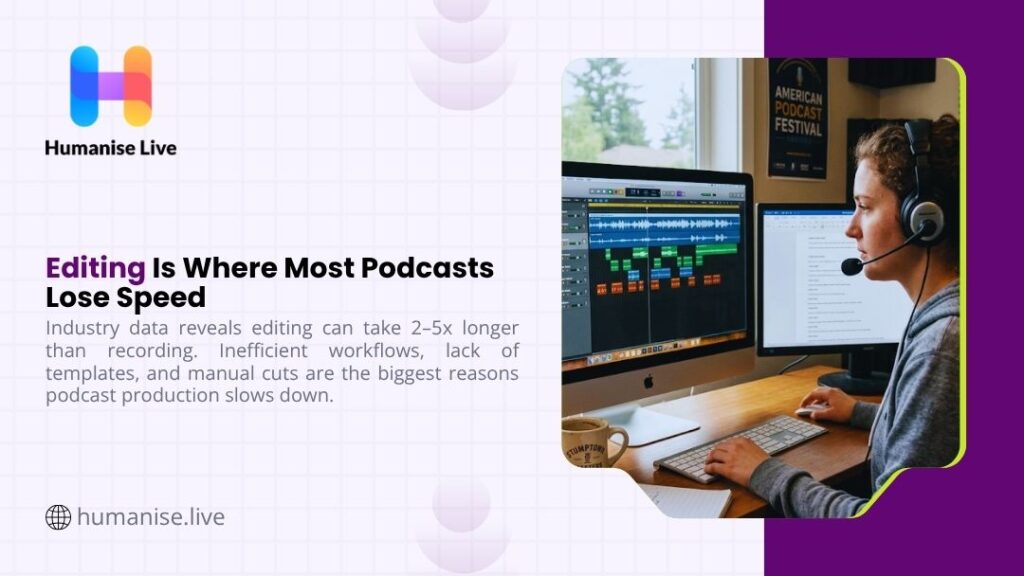
Most people learn how to edit podcasts by experimenting. That works, until it doesn’t. Because without a structured podcast editing process, you end up jumping between tasks. You clean the audio, then cut content, then go back again because something feels off. That back-and-forth is what eats time. A better approach is to treat editing like a sequence, not a guessing game.
| Stage | What Happens Here | Why It Matters |
| Rough cut (top-and-tailing) | Remove obvious mistakes, long pauses | Clears 60–70% of clutter early |
| Audio cleanup | Fix noise, balance levels | Makes everything easier to hear and judge |
| Content shaping | Tighten dialogue, remove filler words like am, ah, and you know | Improves flow without over-editing |
| Branding layer | Add intro, outro, music | Keeps episodes consistent |
| Final listen | Check pacing, transitions | Prevents last-minute fixes later |
The key is not rushing. It’s avoiding rework. Once this rhythm becomes familiar, editing podcast audio no longer feels like a heavy task. It becomes predictable. And predictable work is always quicker.
How Long Podcast Editing Really Takes
Understanding editing time helps you plan realistically.
| Episode Type | Average Editing Time | What Affects It |
| Solo episode | 2–3× runtime | Fewer cuts, simpler structure |
| Interview podcast | 3–6× runtime | Multiple speakers, interruptions |
| Story-driven podcast | 6–10× runtime | Music, transitions, narrative edits |
Research shows that complex podcast post-production can take up to ten times the episode length, depending on format and quality expectations.
That’s why speeding up podcast production isn’t about cutting corners; it’s about reducing unnecessary complexity.
Use Templates, Batch Work, and Cut Approval Delays
Production slows down when decisions are repeated too often. Every time you ask, How should this episode start? Or what format should we use? You’re adding time.
Templates remove that friction. Batching removes context switching. And approvals, well, approvals are where things often get stuck the longest.
| Area | Without Structure | With Structure |
| Episode planning | Starting from zero each time | Reusable outline format |
| Recording | One episode per session | Multiple episodes per session |
| Editing | Custom decisions every time | Presets and standard process |
| Approvals | Several stakeholders involved | One clear sign-off from the owner |
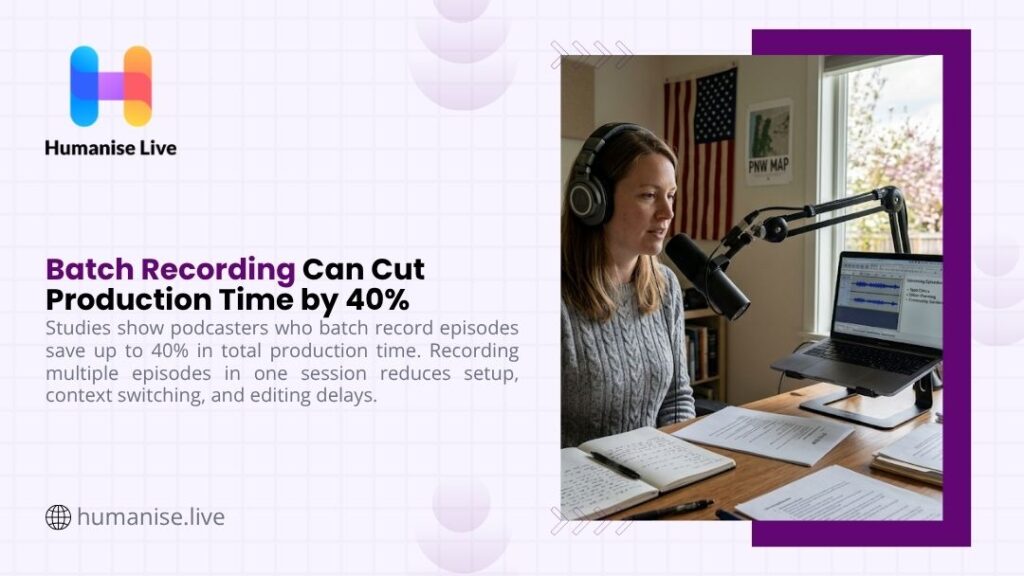
Batch recording alone can change everything. Instead of setting up equipment and preparing guests every week, you do it once and move through several episodes.
And when you combine that with planning, like using a system for how to plan podcast content, the entire production cycle feels less rushed.
The Best Way to Edit Podcast Episodes Faster With AI and Automation
There’s a lot of noise around AI in podcast production right now. Some of it’s useful. Some of it’s overpromised. The reality sits somewhere in the middle. Automation works best when it handles repetitive work, the parts that don’t need creative judgment.
| Task | Traditional Method | Faster Alternative |
| Removing filler words | Manual listening and cutting | AI-assisted detection |
| Cleaning background noise | Manual EQ adjustments | Auto noise reduction |
| Transcribing audio | Typing or outsourcing | Instant transcription tools |
| Finding highlights | Listening through the entire episode | AI-generated clips |
But here’s where people get it wrong. They expect tools to replace thinking. Editing audio for podcast content still needs a human ear. Timing, tone, and pacing don’t come from automation.
Tools speed things up. They don’t decide what sounds right. Using a podcast transcription service can reduce hours of manual work when repurposing content, especially for blog posts or clips.
In-House, Freelancer, or Agency: Which Option Saves the Most Time?
Speed often depends on who handles the work.
| Approach | Time Investment | Quality Control | Best For |
| In-house editing | High | Medium | Small teams with time |
| Freelance editor | Medium | Varies | Growing shows |
| Podcast agency | Low | High | Brands scaling content |
Many teams eventually explore the trade-offs when comparing a freelance podcast editor vs podcast agency, weighing factors like cost, turnaround time, scalability, and the level of creative control each option provides.
Agencies tend to move faster because they already have systems, templates, and dedicated workflows. That removes the trial-and-error phase entirely.
A Weekly Workflow That Helps You Release Faster Without Burnout
A fast podcast isn’t built in one intense day. It’s built through a steady rhythm. When everything is squeezed into one or two days, production feels stressful. And over time, that leads to burnout or inconsistency. A more balanced workflow spreads the load.
| Day | Focus |
| Monday | Planning and outlining |
| Tuesday | Recording sessions |
| Wednesday | Editing first pass |
| Thursday | Final edits and review |
| Friday | Scheduling and publishing |
This kind of structure creates space. You’re not rushing to finish everything at once. It also gives room for improvement. When you’re not under pressure, you notice what can be done better next time.
If you’re unsure about frequency, understanding how often should I release podcast episodes can help you establish a schedule that feels consistent and manageable over time.
Common Mistakes That Make Podcast Production Drag On
Some of the biggest slowdowns don’t come from lack of effort. They come from habits that feel productive, but aren’t. These patterns show up often, especially when teams are trying to improve quality.
| Mistake | What It Leads To | What Works Better |
| Editing every pause | Longer editing time | Keep natural flow |
| Fixing bad recordings | Endless corrections | Improve recording setup |
| Changing format frequently | Relearning workflow | Stick to one format |
| No clear ownership | Delayed decisions | Assign responsibility |
| Doing everything manually | Slow turnaround | Use tools where useful |
| Recording last-minute | Rushed episodes | Plan ahead |
Once you recognize these, it becomes easier to avoid them. And interestingly, removing just one or two of these habits can noticeably speed up the entire podcast production process.
When Faster Podcast Production Becomes a Business Advantage
Speed isn’t just about efficiency. It changes how a podcast fits into a wider strategy. When production runs smoothly, content can align with campaigns, launches, or events. That timing matters more than people expect.
It also improves consistency. And consistency builds trust, something especially important for purpose-driven brands and organizations. There’s another layer to this as well. Faster production makes it easier to repurpose content. A single episode can turn into clips, articles, and social posts without adding extra workload.
That’s why many teams eventually look at structured solutions like corporate podcast production or b2b podcast production, not because they can’t do it themselves, but because they want a system that runs without constant effort.
FAQs about Speed of Podcast Production
How to increase the speed of a podcast?
Improve recording quality, follow a structured podcast editing process, and batch episodes instead of producing them one at a time.
What is the $1 to $1 million podcast?
It refers to podcasts that start small and scale into profitable platforms through audience growth, sponsorships, and content strategy.
Can ChatGPT edit a podcast?
ChatGPT can support scripting and content planning, but it cannot perform actual podcast audio editing.
Is there a 30 for 30 podcast?
Yes, ESPN produces 30 for 30 Podcasts, focusing on documentary-style storytelling.
What is the best way to edit podcast episodes faster?
Use a step-based editing process, combine automation for repetitive tasks, and avoid over-editing.
How long should podcast editing take?
Usually between two and six times the episode length, depending on complexity and production quality.
Make Your Podcast Production Easier to Run
If you’ve been trying to figure out how to speed up podcast production, the answer isn’t doing more work faster. It’s removing what slows you down. Cleaner recordings, better planning, structured editing, fewer approval delays, and the right support system make the biggest difference.
For teams that want a smoother process without constant effort, exploring a full-service approach like humanise live podcast services can help you simplify everything from recording to publishing.
And that’s what it comes down to: less friction, more consistency, and a process you can actually sustain.
