
The world of podcasting keeps expanding, but visibility rarely happens by accident. Understanding how to promote your podcast in a global market requires more than posting links or relying on luck.
This guide takes a realistic look at podcast marketing, covering organic reach, SEO, social distribution, community engagement, and the role of specialist services for creators and brands who want sustainable growth.
Why Promoting Your Podcast Matters in a Global Market?
The podcast universe has shifted. A decade ago, you could publish a show and watch listeners arrive on their own. Today, the landscape is broad, competitive, and fast-moving. Millions of podcasts exist, yet only a fraction stay active for more than a few months.
The challenge has nothing to do with creativity. It’s discoverability. When so many shows compete for the same earbud space, promotion transforms from a side task into a foundational element of podcast success.
Good podcast promotion does three things. It clarifies the audience you want, it builds steady demand for every episode, and it creates reliable pathways for potential listeners to find you. Promotion is no longer a final step. It is a strategy that starts before the first episode airs.
Understanding how to promote your podcast globally means recognizing that listeners behave differently across regions. Some markets lean into video-first discovery. Others discover new audio through editorial selections or local networks. Treating the world as a single block never works. What does work is combining universal marketing principles with flexible distribution that adapts to regional habits.
The question isn’t whether podcast marketing is worth the effort. The question is which approach fits the podcast you are building and the audience you want to reach.
Preparing How to promote your podcast
Several podcasts struggle before they even reach the marketing stage because the basics never receive proper attention. Promotion can only amplify what already exists. If the foundation is weak, growth becomes unpredictable.
Start by identifying your core listener. A well-defined audience profile influences your podcast name, your cover art, your episode titles, and even how you frame each conversation. It also guides your choice of distribution channels.
A B2B leadership show attracts listeners differently from a pop-culture commentary series. When your positioning is clear, promotional work becomes far simpler and far more consistent.
A dedicated podcast website helps enormously. It acts as a hub for new visitors, a place to explain the value of your show, and a home for your episodes, transcripts, and supporting material.
For creators who want a more structured production workflow, Humanise Live offers full podcast services through podcast production. Their approach supports everything from development to editing, which keeps the groundwork organised before you begin outreach.
Good production quality is another essential piece. Even when content is compelling, inconsistent audio turns away new listeners quickly. For teams without in-house editors, services such as podcast audio editing or podcast video editing offer a straightforward path to cleaner, more publishable episodes. Listeners forgive many things; poor sound isn’t one of them.
Promotion works best when your foundation is genuinely ready. That means clear positioning, a discoverable home page, and dependable audio to understand how to promote your podcast.
Strengthening Discoverability Through Search
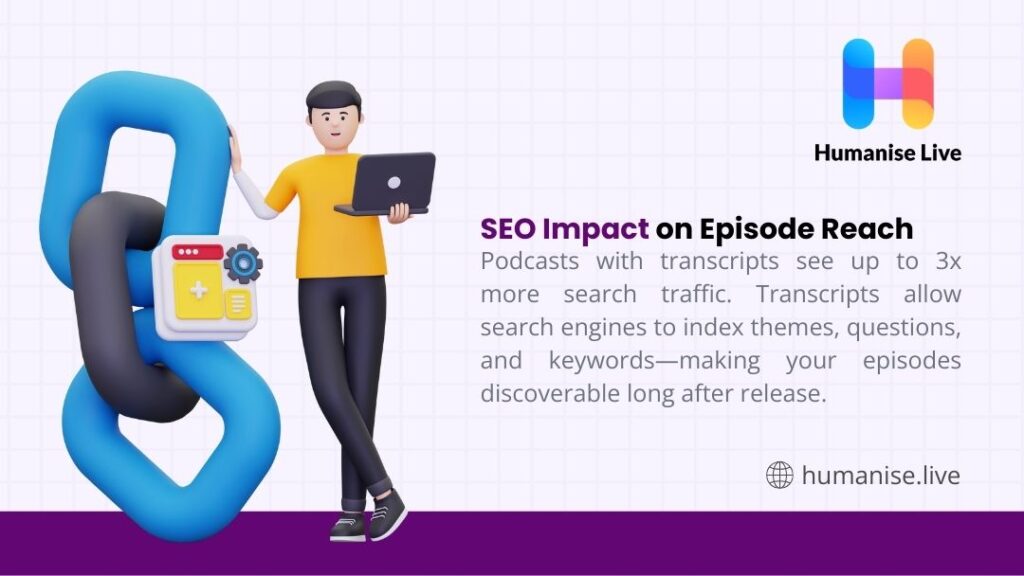
Search is one of the least glamorous parts of podcast marketing, yet it leads to long-term, predictable growth with understanding of how to promote your podcast. When someone types a topic or question into a search engine, your podcast should have a chance of appearing among the results. That’s where podcast SEO comes in.
Optimizing a show begins with the essentials: a descriptive title, an accurate category, thoughtful tags, and a concise explanation of what your podcast offers. Think of this section as a handshake with the algorithm. When your wording matches the way listeners search, the system understands your intent.
Episodes benefit from similar attention. Include natural language phrases related to your main themes, along with relevant queries that align with the way people look for information. When your content addresses what an audience already wants to know, search engines treat your episodes as helpful resources rather than incidental uploads.
Transcripts strengthen this process further. Search engines recognize text. When an episode has a full transcript attached, the system can match specific phrases and topics with real user queries. For creators who don’t want to transcribe manually, Humanise Live supports this through their podcast transcription service, ensuring episodes are readable and indexable.
Show notes deserve attention as well. They function as a written mini-guide to your episode, drawing in readers who prefer scanning before listening. When well structured, show notes act as both a resource for listeners and a search-friendly entry point for new visitors.
Promoting Your Podcast on Social Platforms
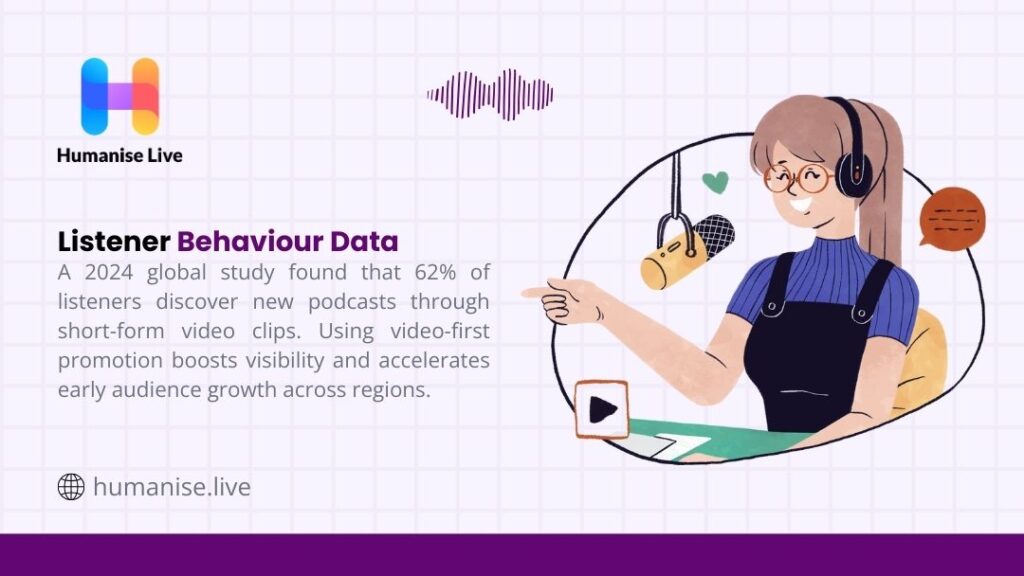
Social media remains one of the fastest routes to visibility, though not all platforms reward podcasts in the same way. Learning how to promote your podcast on social media involves adapting each piece of content to what the platform naturally prefers. Video plays a central role in modern promotion.
Social Platforms for Podcast Promotion
| Platform | What It’s Best At | How Podcasters Use It |
| Short visual moments, quick engagement, stories | Share vertical clips, quotes, behind-the-scenes shots, and episode announcements | |
| TikTok | Fast discovery and viral short-form video | Post tight, punchy clips or funny/insightful moments to pull in new listeners |
| Thought leadership and industry-focused conversations | Share insights from episodes, guest highlights, and business-focused takeaways | |
| YouTube | Long-term search, video discovery, full-episode viewing | Upload full episodes, shorts, and highlights; build a searchable archive |
| Twitter/X | Real-time reactions and conversation threads | Drop quick thoughts, episode links, and clips; engage in topic-based discussions |
| Community building, groups, and local interest | Share updates in groups, post episodes, and connect with niche communities | |
| Threads | Casual conversations and culture-driven chatter | Share light commentary, quick updates, and episode moments with a more relaxed tone |
| Evergreen discovery of visual content | Pin episode graphics, quotes, checklists, and educational visuals | |
| Podcast Guests’ Platforms | Built-in trust and audience reach | Provide guests with clips and captions so they can share easily and expand your reach |
A steady social rhythm helps your show feel alive. Each week, share an episode announcement, a clip, a reflective note or highlight, and a reminder of a strong older episode. This combination avoids fatigue and keeps your content varied.
Promotion works best when your guests participate, too. A simple media kit containing pre-written captions, a short clip, and an image gives guests everything they need to share the episode easily. Many podcasters find that guest amplification leads to remarkable spikes because it reaches audiences who already trust the speaker.
Social media should feel manageable rather than draining. Once you know which platforms genuinely matter for your show, you can shape your workflow accordingly.
Organic Strategies That Work Without Paid Ads
Not all growth requires money. Many reliable podcast promotion methods depend on connection, relevance, and simple consistency.
Email list: A well-maintained email list gives you a way to speak directly to your most committed listeners. A short update about the week’s episode, a behind-the-scenes note, or a curated list of recommendations helps maintain a conversation with your audience. Over time, these messages create a sense of closeness that outperforms algorithm-driven reach.
Cross-promotion: It is one of the strongest ways to reach new listeners. Appearing on other podcasts exposes your voice to an audience already interested in your subject. Some creators arrange trailer swaps or feed drops, allowing each show to introduce the other to their listeners.
Communities: Communities also matter. Many conversations happen in niche groups where passionate listeners gather. Joining a community isn’t about posting links. It’s about participating in meaningful discussions, contributing insight, and sharing episodes when they genuinely support the topic at hand.
Events are often overlooked in promotion. A talk, a panel appearance, or a workshop can drive interest from people who already value your perspective. A tailored event service and a dedicated speaker agency help convert offline visibility into new listeners.
Organic growth is slower than paid advertising, but it builds a more durable base of engaged listeners to know how to promote your podcast.
Paid Promotion and When It Makes Sense
There comes a moment when organic methods flats. Paid promotion helps accelerate growth when your message is clear, your production is reliable, and your listeners show genuine interest in what you offer.
Podcast advertising inside listening apps tends to reach people who already listen to shows regularly. Markets vary, but host-read placements often outperform recorded ones because they feel more personal and trustworthy. Buying small test placements gives you a feel for how each channel reacts to your message.
Social advertising can also support your episodes. Short video trailers summarizing your show or highlighting a standout moment can persuade potential listeners to explore more. The most effective ads don’t sell the show outright; they give a taste of the experience.
Some podcasters also invest in directory-based promotions or sponsored placements within podcast newsletters. These work best when targeting niche interests rather than broad categories.
The purpose of paid promotion isn’t to replace organic marketing. It’s to widen the path for people already inclined to enjoy what you create.
Promoting a New Podcast from the Start
Launching a new show requires a bit more structure than promoting an established one. Early momentum shapes how algorithms treat your podcast in the first few weeks.
A thoughtful launch announcement helps people understand why the show exists and what listeners can expect. The message should be clear, simple, and built around the benefit to the listener.
Pre-launch engagement builds anticipation. Sharing the development process, posting early clips, or asking your audience for input on topics invites people into the experience before the show is live.
A coordinated release week often works well. Publishing several episodes at once gives new listeners material to explore and signals that the show has depth. Sustained promotion across social, email, and community channels during this week encourages steady traffic across multiple regions. Once the launch period closes, the focus shifts to sustainable growth rather than weekly spikes.
Long-Term Growth Through Consistency and Structure
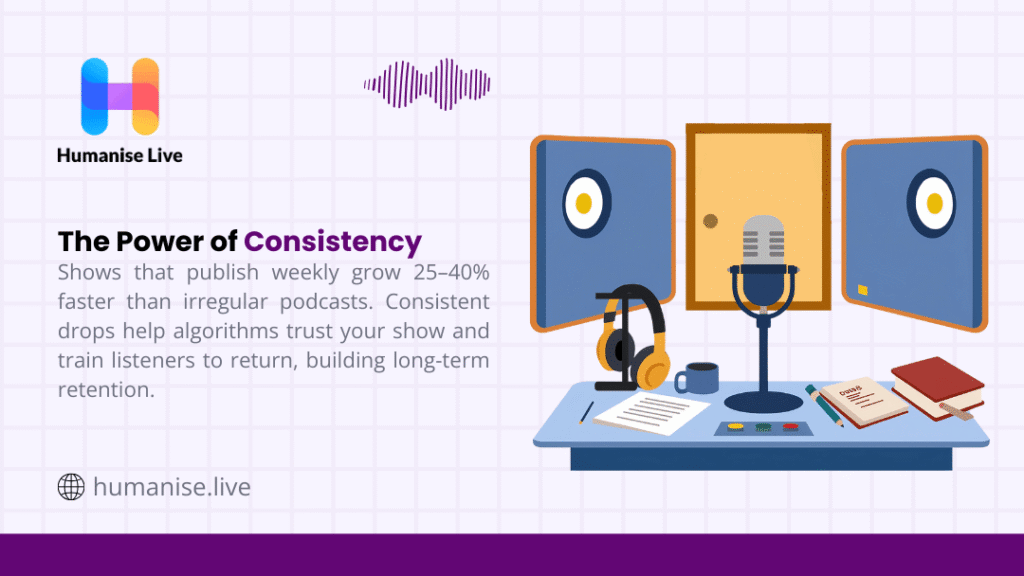
Listener behaviour follows patterns. When a show appears consistently and offers clear value, audiences gradually commit. Long-term growth depends on understanding these patterns and adjusting your strategy accordingly.
| Strategy | What It Is | How It Helps | Extra Notes |
| Content Funnel | Guiding new listeners from discovery → sampling → subscribing | Removes friction so people naturally move from curiosity to trust | Works best when your branding, episode titles, and intro moments feel consistent |
| Refreshing Older Episodes | Updating titles, improving notes, linking past episodes to newer ones | Extends the lifespan of your back catalog and boosts long-tail discovery | Older episodes can outperform new ones once optimized |
| Community Engagement | Private groups, live chats, Q&As, or casual listener spaces | Deepens connection and makes listeners feel involved | Strong communities often become your most loyal promoters |
| Integrating With a Larger Content Strategy | Connecting podcast episodes to blogs, social posts, talks, or brand messaging | Strengthens authority and keeps your messaging unified across platforms | Humanise Live supports B2B podcast production for business-focused shows |
Long-term growth feels steady rather than explosive, but it tends to be far more dependable.
Tracking Your Progress Without Getting Lost in Numbers
Promotion only works when you know what actually drives results. Tracking data helps clarify which strategies deserve more investment and which ones you can safely retire.
Downloads remain a basic metric, but they tell only part of the story. Listener retention, subscriber growth, click-throughs from show notes, and repeat listens form a clearer picture. Understanding which episodes attract new listeners helps guide future content decisions.
Attribution will never be perfect, especially for audio. People discover podcasts in ways that data cannot always capture. That’s why mixing analytics with audience feedback creates a more realistic view of progress.
Key Metrics for Sustainable Podcast Growth
| Metric | What It Indicates | How It Supports Promotion |
| Listener retention | Quality of episode engagement | Helps identify segments worth highlighting in marketing |
| Subscriber growth | Strength of long-term appeal | Shows whether new listeners convert |
| Traffic to the podcast website | Effectiveness of SEO and search | Reveals which topics attract global audiences |
| Social click-through rate | Relevance of social content | Helps refine future promotional posts |
Once you see which channels truly drive listener movement, you can adapt your podcast marketing strategy with confidence to know how to promote your podcast.
Practical Promotion Plans You Can Apply Immediately
To make weekly promotion easier, having a structured plan can save time and prevent guesswork. Planning doesn’t need to be complicated. It needs to be repeatable. A launch calendar works well for new shows, while a weekly checklist supports ongoing series.
Sample Weekly Promotion Framework
| Day | Action | Purpose |
| Monday | Publish episode and update show notes | Signals platforms and gives listeners fresh content |
| Tuesday | Share a podcast clip on the main social platform | Drives short-form discovery |
| Wednesday | Send a brief email summary | Encourages consistent listening |
| Thursday | Highlight an older episode linked to the current theme | Revives your catalogue |
| Friday | Share a reflective quote or insight | Builds a connection with your audience |
Small, consistent steps create reliable growth over time to know how to promote your podcast.
When Professional Support Strengthens Your Promotion Strategy
Some creators manage their promotion independently. Others recognize when professional help produces better outcomes. A specialist team offers clarity, structure, and expertise that shortens the learning curve.
Podcast marketing services often include long-term planning, analytics, audience development, editing, and distribution support. This is for creators and organizations who want consistent growth without managing every detail alone. Their approach combines production with strategic promotion, which suits both individual hosts and brands seeking reliable podcast visibility.
Working with a professional partner should feel collaborative. You bring the vision. They bring the structure and technical skill. Together, the process becomes calmer, more predictable, and easier to sustain to learn how to promote your podcast.
Keeping Your Podcast Moving Forward
The process of learning how to promote your podcast never truly ends. New platforms emerge, audience habits shift, and creative opportunities appear unexpectedly. The goal is not perfection. It’s a steady refinement. With a clear understanding of your audience, thoughtful distribution across search and social, and a consistent rhythm for each episode, your podcast can grow in ways that feel both natural and sustainable.
If you want structured support for production, editing, or long-term podcast marketing, Humanise Live offers a range of podcast services for creators and teams who want to elevate their work without losing time to technical workflows with the knowledge of how to promote your podcast.
