
Most people ask one question at launch and a different one a month later. At first, they ask how much it costs to start a show. Then reality kicks in, and the real question becomes how much does it cost to run a podcast per month once the gear is on the desk, the trailer is live, and the work starts to pile up.
This guide answers that second question with clear monthly ranges, cost-per-episode math, and realistic budgets for solo creators, charities, founders, and brand teams.
How much does it cost to run a podcast per month?
In 2026, how much does it cost to run a podcast per month depends less on your microphone and more on your workflow. A lean DIY show can run at roughly $15 to $150 per month if you use low-cost tools and handle your own editing. A polished independent or small-business show usually lands closer to $300 to $1,500 per month once you add paid software, editing help, transcripts, clips, and promotion.
A full-service branded show can sit anywhere from $2,000 to $20,000 per month, especially when strategy, guest management, video, and distribution support are part of the package. Those ranges line up with public pricing and guidance.
Search demand makes sense. Podcast use keeps climbing, which means more brands now treat a show as an ongoing media channel rather than a one-off experiment. Edison’s 2025 data found that 73% of Americans age 12+ had consumed a podcast in audio or video form, while 55% were monthly consumers.
Video is no longer some side route either: Edison reported 37% of Americans age 12+ watched a video podcast in the last month, and YouTube said viewers watched over 700 million hours of podcasts on living room devices in October 2025. And that’s why monthly operating cost matters more than startup fantasy math.
Realistic monthly podcast budget ranges in 2026
| Podcast type | Typical monthly range | What that usually includes |
| Lean DIY audio podcast | $15–$150 | Hosting platform, basic editing software, simple workflow |
| Hybrid show with freelance help | $300–$1,500 | Hosting, recording, and editing transcripts, light repurposing |
| Professional branded podcast | $2,000–$20,000 | Strategy, production, editing, guest support, promotion, reporting |
What shapes your monthly podcast budget
When people ask how much does it cost to run a podcast per month, they often expect one neat number. Trouble is, there isn’t one. The budget moves with your format. A solo audio show with one host and no guest outreach is cheap to maintain.
A branded podcast with remote guests, approvals, shorts, YouTube uploads, captions, and paid support can swell fast. Episode length matters. Publishing cadence matters. Video matters even more because the edit takes longer, the storage bill grows, and the review cycle rarely stays tidy.
The other piece most first-time hosts miss is labor. Podcast equipment is a one-time purchase. Time is the monthly bill that keeps showing up. The more handoffs you add, the more your podcast production cost rises.
That includes show planning, guest outreach, recording checks, audio cleanup, thumbnail prep, show notes, transcripts, publishing, analytics, and promotion. So when someone asks how much does it cost to run a podcast per month, the honest answer is: your process decides the number.
Fixed monthly costs every podcast should expect
A monthly podcast budget starts with the costs that barely move. Hosting is the most obvious expense. Public examples still show a wide entry range, with some plans starting around $15 per month, others closer to $19 per month, older pricing references near $12 per month, and some platforms continuing to position podcast hosting as free. The gap tells you something useful. Hosting fees exist, but for most shows, they are not the main cost driver.
Editing software can also be fixed, though some teams keep that cost near zero with free software or open source tools. Others bundle editing, hosting, and publishing into a monthly tool stack. The Podcast Host points to a $38 per month all-in-one route for creators who want a single system rather than a patchwork of apps. That can help on small teams where simplicity matters more than shaving a few dollars off the bill.
Common fixed monthly podcast costs
| Cost area | Typical monthly range | Notes |
| Podcast hosting service | $0–$20+ | Free options exist, but features vary |
| Recording platform | $0–$30+ | May be bundled with other tools |
| Editing software | $0–$40+ | Free software works for many early shows |
| File storage/backups | $0–$25+ | More relevant for video podcast files |
| Website or landing page tools | $0–$30+ | Often optional early on |
| Podcast subscription admin | Varies | Relevant only if premium content is part of the model |
If you plan to monetize through a podcast subscription, platform rules matter. Apple says creators can offer monthly or annual plans in more than 170 countries and regions, and that creators receive 70% of subscription revenue, rising to 85% after a subscriber completes one year of paid service. That can offset part of your monthly spend, but only if the audience is already engaged. For most newer shows, subscription revenue is not there on day one.
Variable costs that rise as your show grows
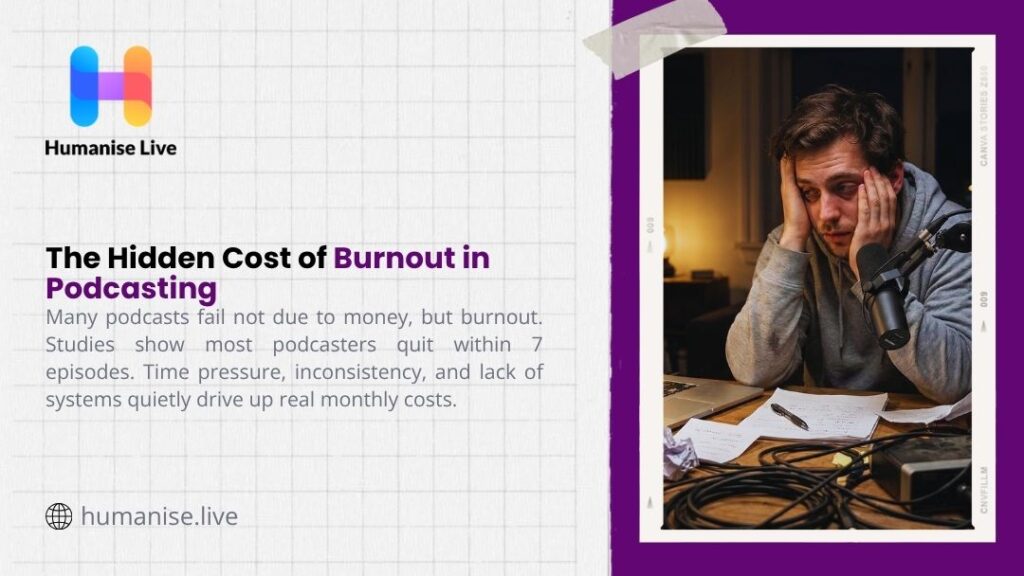
This is where how much does it cost to run a podcast per month turns from a tidy spreadsheet into a moving target. Variable costs include freelance editing, engineering, social clips, show notes, transcripts, guest booking, paid ads, and revision rounds. You may skip them in month one. By month six, they often become the difference between a show that survives and a show that quietly disappears.
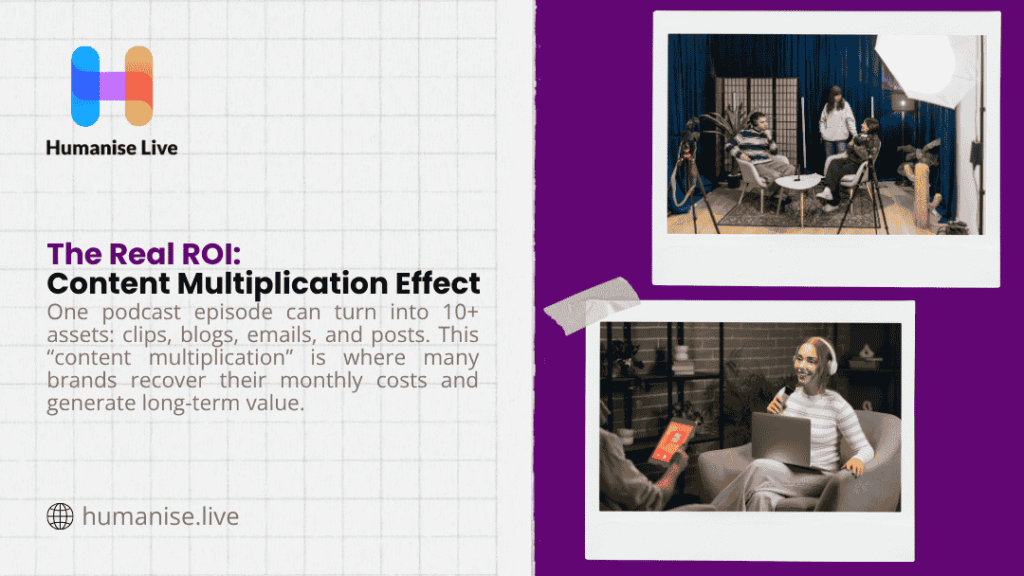
Transcription is a good example. It helps with accessibility, repurposing, SEO, quotes, and internal search. But it adds a recurring line item, especially when the show is long or frequent. The same goes for repurposed video assets. A single episode can become YouTube clips, LinkedIn snippets, short reels, a written recap, and email copy. Great for reach. Not free in labor terms.
That is why many teams drift into a hybrid model. They record in-house, then outsource the fiddly parts. For brands aiming for a smoother workflow, podcast production or specialist podcast editing can help keep monthly costs more predictable, even if the upfront pricing appears higher.
Podcast cost per episode: what weekly, biweekly, and monthly publishing really adds up to
Publishing frequency changes everything. If you want to know how much does it cost to run a podcast per month, don’t ask only about tools. Ask how many episodes you plan to release. A cheap stack can still become expensive if you publish weekly and need support every time.
Sample monthly budgets by publishing cadence
| Setup type | 1 episode/month | 2 episodes/month | 4 episodes/month |
| DIY audio | $15–$150 | $20–$180 | $30–$250 |
| Hybrid with a freelance editor | $200–$600 | $300–$1,000 | $500–$1,500 |
| Full-service brand show | $800–$3,000 | $1,500–$6,000 | $2,500–$20,000 |
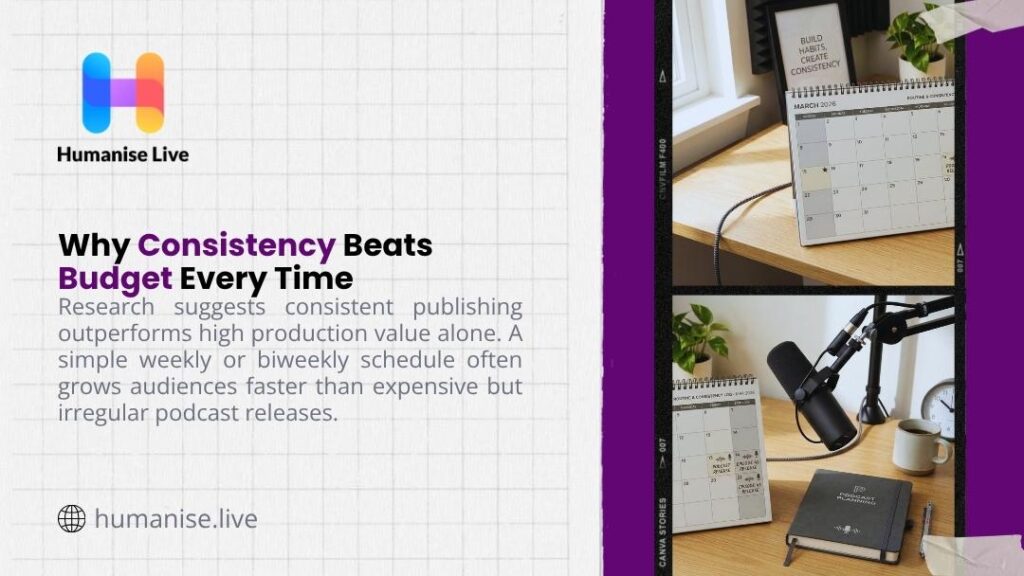
A weekly show feels productive, but it multiplies every hidden task. More files to check. More guest emails. More edits. More upload deadlines. More chances for something to go sideways. That is why many business podcasts start biweekly. It gives the team enough room to maintain high quality without burning through budget and patience in the same month.
If your team records remotely, the monthly cost also depends on how smooth that capture process is. Understanding remote podcast recording matters here because remote workflow problems usually cost more in cleanup than they save in convenience.
Three realistic podcast budget ranges for 2026
A stripped-back indie show can still work on a tiny budget. Industries says you can launch for less than $200 if you already have a computer and keep things simple. That’s the startup cost, though, not the monthly operation. Once the show is live, the lean route still asks for time, discipline, and decent audio editing habits. If you stay DIY, how much does it cost to run a podcast per month can remain low, but only because you are absorbing the labor yourself.
The second tier is the one most serious small businesses end up choosing. They keep the host, the voice, and the subject matter in-house, but pay for help with editing, scheduling, transcripts, maybe clips, maybe publishing. This is the zone where podcast production services pricing becomes relevant because the team wants consistency without a full agency retainer. It is also where the podcast cost per episode becomes the easiest planning metric.
The third tier is full-service. Industry estimates suggest that entry-level agency production can cost around $500 to $1,000 per episode, while professionally produced B2B podcasts may range from $2,000 to $20,000 per month, depending on production quality, distribution strategy, and team resources.
Humanise Live’s own public pricing sits below many bigger-agency figures, with outsourcing podcast production costs starting from published per-episode rates and a free first episode model, while its corporate podcast production frames larger business packages around ROI-focused monthly retainers.
How much does it cost to start a podcast versus running one every month?
These two costs get lumped together all the time, but they’re not the same thing. Startup costs are mostly one-off purchases and setup tasks. Monthly costs are the recurring expenses that keep the show live, polished, and consistent after launch.
| Cost category | Starting a podcast (one-time or occasional) | Running a podcast every month (recurring) |
| Equipment | Microphone, headphones, webcam, boom arm, acoustic treatment | Replacement gear, upgrades, maintenance |
| Branding | Cover art, intro/outro music, podcast name assets | Occasional refreshes, new creative for campaigns |
| Setup | Trailer episode, account setup, RSS configuration, distribution setup | Ongoing platform management and feed checks |
| Hosting platform | Usually not a major upfront cost beyond account setup | Monthly podcast hosting costs or podcast subscription platform fees |
| Recording software | Initial tool choice and setup | Monthly or annual software charges if using paid tools |
| Editing | Learning the process or hiring help for launch assets | Regular recording and editing for each episode |
| Content planning | Show concept, episode structure, first batch of ideas | Ongoing planning, guest research, scripting, scheduling |
| Publishing | Initial setup for directories like Spotify and Apple Podcasts | Episode uploads, metadata, show notes, thumbnails, publishing workflow |
| Promotion | Launch campaign, first graphics, trailer push | Monthly podcast marketing, clips, ads, email promotion, and repurposing |
| Support services | Optional help for launch strategy | Recurring podcast production services pricing, transcription, monitoring, and video editing |
So here’s the real difference: the cost to start a podcast is usually easier to control because it happens once. The monthly cost is what determines whether the show stays consistent, grows an audience, and keeps delivering value over time.
Podcast hosting costs, recording and editing, and where most teams overspend
When people calculate how much does it cost to run a podcast per month, they often focus on tools, but the real issue usually lies in how those tools are used. Hosting stays predictable, but recording quality and editing inefficiencies quietly inflate the monthly spend.
Core podcast costs vs common overspending areas
| Cost Category | Typical Monthly Range | Where Teams Overspend | Smarter Approach |
| Podcast hosting service | $0–$20+ | Paying for features never used or overestimating storage needs | Choose a plan based on episode frequency and file size |
| Recording platform | $0–$30+ | Switching tools frequently or using unstable setups | Stick to one reliable system with consistent audio quality |
| Audio editing | $100–$1,000+ per month ($75-$500 per episode) | Fixing poor recordings, excessive revisions, and long cleanup times | Improve recording quality to reduce editing workload |
| Video editing (if used) | $100–$1,000+ per episode ($40-$300+ per video) | Over-editing or producing unnecessary formats | Focus on key clips that drive engagement |
| Software stack | $10–$80+ | Subscribing to multiple overlapping tools | Consolidate into one or two essential tools |
Most overspending doesn’t come from high prices; it comes from inefficiency. Clean recordings, a clear format, and a repeatable workflow reduce editing time, which is where the highest hidden cost usually lives.
DIY, freelancer, or podcast production services pricing: which route saves money long term?
DIY is cheap in cash terms. Freelancers are the middle road. Full-service help costs more on paper, yet it often saves time, reduces missed deadlines, and lowers the drag on an internal team. So the question is not merely how much a podcast costs. It is what the team loses when the show becomes one more half-finished task that nobody owns.
Freelancers suit teams with a clear plan and reliable internal review. Agencies or specialist partners suit teams that want structure, guest coordination, editorial support, and a scalable system. For UK buyers comparing options, podcast production costs in the UK and podcast hosting services provide a clearer picture of ongoing expenses, helping ground decisions in realistic recurring costs rather than assumptions.
Hidden monthly costs nobody mentions early enough
The tricky part about how much it costs to run a podcast per month is that many expenses don’t appear upfront. They show up later, once the show gains momentum and expectations rise.
Hidden podcast costs that impact your monthly budget
| Hidden Cost Area | Typical Impact | Why It Adds Up | How to Control It |
| Revision rounds | Time + $50–$300+ | Multiple edits per episode extend production time | Set clear approval processes early |
| Guest coordination | Time + tools | Scheduling, reminders, rescheduling, and delays | Use structured booking systems |
| Transcription & captions | $10–$150+ | Needed for SEO, accessibility, and repurposing | Automate or batch transcription tasks |
| Content repurposing | $50–$500+ | Clips, posts, and assets require extra work | Plan repurposing during recording |
| File storage & backups | $5–$50+ | Video podcasts increase storage demands | Archive strategically and compress files |
| Publishing & monitoring | Time + tools | Errors require re-uploads and fixes | Use reliable distribution workflows |
| Promotion & ads | $100–$1,000+ | Paid reach becomes necessary for growth | Start organic before scaling ads |
These costs don’t feel significant at first, but over time, they define how much does it cost to run a podcast per month, more than any single tool or subscription. The difference between a manageable budget and an expensive one often comes down to planning, not pricing.
Can you run a podcast for free?
Technically, yes. Spotify for Creators still presents podcast hosting and distribution as free. Plenty of creators also use free software and basic gear. So, if the question is, does it cost money to start a podcast, the answer is not always much. If the question is whether you can run a high-quality, reliable, branded podcast for free month after month, the answer is usually no. At some point, quality asks for either money or time, and time is never really free.
That’s the split many beginners miss. You can start a podcast on a shoestring. Running it well each month is another matter. So when people ask if it is free to start a podcast, the better reply is: free to begin, rarely free to maintain at a professional standard.
How much do podcasters make, and does the monthly cost pay off?
This is where expectations need a bit of cold air. Most shows do not make meaningful money straight away. Even so, podcast economics are improving. The IAB’s U.S. Podcast Advertising Revenue Study projected the medium to approach $2.6 billion by 2026, and later 2025 reporting tied U.S. podcast ad revenue in 2024 to roughly $2.4 billion. The market is healthy, but that does not mean every show turns profitable on ads alone.
For many business podcasts, the return shows up elsewhere. Pipeline. Trust. Better conversations with prospects. A stronger founder profile. More reusable content from one recording session.
If you want the direct revenue angle, Apple’s subscription model lets creators sell premium access and keep a share of the fee, but most branded podcasts justify their monthly budget through influence and demand generation, not listener subscriptions alone. For growth-minded teams, that is where podcast marketing services and a sensible podcast advertising plan become relevant.
A simple podcast budget calculator you can use before launch
A practical monthly formula is easier than a dramatic one. Start with fixed monthly tools. Add labor or support cost per episode. Multiply that by your release cadence. Add promotion and any extras such as transcripts, clips, or guest research. That gives you a working podcast budget.
If you want a simple rule of thumb, it looks like this:
Monthly podcast cost = fixed tools + (episode support × number of episodes) + promotion + extras
That formula works whether you are creating your own podcast, testing podcast production rates, or trying to decide how much to charge to produce a podcast for a client.
What a sensible podcast budget looks like for charities, founders, and B2B brands
Charities often need a careful monthly cap, so the smartest route is usually audio-first, limited publishing frequency, and selective outsourcing. Founders can start lean, but if the podcast is meant to open doors, polished editing and good guest prep make a visible difference.
B2B brands often gain most from a stable, repeatable process and a backlog plan. In those cases, learning how to plan podcast episodes can help prevent costs from drifting, especially when teams record without a clear structure or direction.
If guest-led episodes are part of the format, finding podcast guests becomes a budget issue, too. Strong guests lower the need for heavy promotional spend because the right guest often brings reach, credibility, and better clips built into the episode itself.
Where to cut costs without hurting audio quality
Cut complexity before you cut quality. Keep the format simple. Batch record where possible. Avoid needless edits by prepping guests well. Start biweekly if weekly will strain the team. Use free software where it works, but do not hang onto bad tools out of habit. The cheapest podcast is not the one with the lowest invoice. It is the one you can sustain without letting the show slip.
Understanding how often I should release podcast episodes can make a noticeable difference, since release frequency is one of the biggest factors influencing how much it costs to run a podcast each month. So is scope. A focused audio show with clean production often beats a messy video show that drains the team and the budget.
If you want a clear monthly cost, start with the workflow
So, how much does it cost to run a podcast per month in 2026? For some teams, it sits under $100. For others, it climbs into the thousands. The difference comes down to one thing: how your workflow is built.
Start with the process, not the price. Map your fixed tools, decide how often you’ll publish, and be honest about the time and effort each episode takes. Then choose what to handle in-house and what’s better left to experts. That’s how you avoid wasted spend and build a podcast you can actually sustain.
Because here’s the thing, the best podcasts aren’t the most expensive ones. They’re the ones that stay consistent, sound human, and connect with the right audience month after month.
Want a podcast that runs smoothly without draining your time or budget? Explore Humanise Live’s end-to-end podcast support and see how a simple, human-first workflow can make all the difference.
